 Save to Pinterest
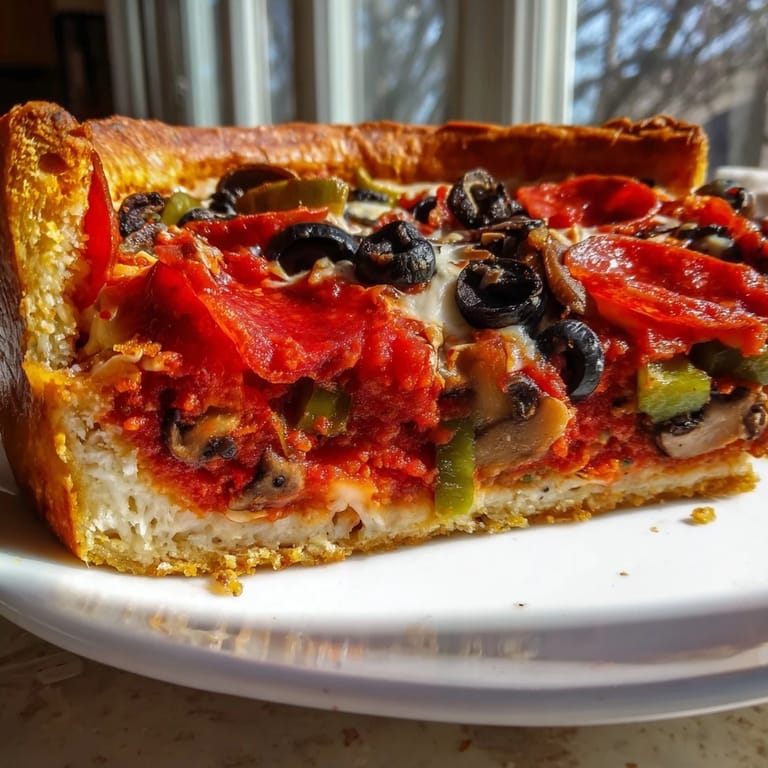
 The first time I made deep dish pizza at home, I wasn't trying to recreate Chicago authentically—I just wanted something that felt substantial, something you'd need both hands to hold and your jaw to work a little. That buttery, cornmeal-dusted crust, the way it gets golden and crispy while the cheese bubbles beneath a blanket of chunky tomato sauce—it became the kind of meal that makes people linger at the table longer than they planned. Now whenever I pull one of these pies out of the oven, the whole kitchen fills with this warm, savory steam that feels like an invitation.
I remember making this for a group of friends on a rainy Saturday, and one of them bit into a slice and just went quiet for a moment—not because anything was wrong, but because of that contrast between the soft interior and the slight crispness on the outside, with all that cheese somehow staying creamy instead of rubbery. It became the kind of meal that people still text me about months later.
Ingredients
- All-purpose flour (3 1/4 cups): This is your foundation—the gluten network here is what gives deep dish its characteristic chew without toughness.
- Yellow cornmeal (1/2 cup): This isn't just texture; it adds a subtle, almost sweet flavor and prevents the dough from sticking while giving the crust that authentic speckled look.
- Active dry yeast (2 1/4 teaspoons): One standard packet—this amount gives you a reliable rise without over-fermentation that could make the dough taste yeasty or bitter.
- Warm water (1 1/4 cups at 110°F): Temperature matters here; too hot and you'll kill the yeast, too cold and nothing happens, so use a thermometer if you have one.
- Olive oil (1/4 cup) plus melted butter (2 tablespoons): This combination is the secret—the olive oil adds depth while the butter brings richness and helps the crust brown beautifully.
- Salt (1 1/4 teaspoons): Enhances flavor throughout the dough and strengthens the gluten structure.
- Shredded mozzarella cheese (3 cups): Use whole milk mozzarella, not low-moisture; it melts smoother and has better flavor, though it might release a little liquid which is actually welcome here.
- Grated Parmesan cheese (1/2 cup): This brings a salty, umami punch that mozzarella alone can't deliver, and it helps the cheese layer develop those lightly browned edges.
- Crushed tomatoes (one 28 oz can): San Marzano is ideal if you can find it, but any good quality crushed tomato works—avoid sauce that's been sitting in a can for years.
- Garlic (3 cloves, minced): Fresh is non-negotiable; jarred garlic tastes stale in something as simple as this sauce.
- Dried oregano and basil (1 teaspoon each): Add these to the sauce while it simmers so they fully hydrate and release their oils.
- Mushrooms, bell peppers, and black olives: Slice them thin so they cook through and don't overwhelm the other flavors—thick slices will steam rather than integrate.
- Pepperoni or Italian sausage (1/2 cup, optional): If using sausage, cook it first to render some fat, which adds incredible depth to every bite.
Tired of Takeout? 🥡
Get 10 meals you can make faster than delivery arrives. Seriously.
One email. No spam. Unsubscribe anytime.
Instructions
- Bloom the yeast and build the dough:
- Combine warm water and yeast in a large bowl and let it sit for about 5 minutes—you'll see it get foamy and smell almost sweet, which means it's alive and ready. Add flour, cornmeal, salt, olive oil, and melted butter, stirring until everything comes together into a shaggy mass. Now knead for 5 to 7 minutes; you're looking for a dough that's smooth and slightly elastic, no longer sticky but still a bit tacky.
- Give the dough time and space:
- Place your dough in a lightly oiled bowl, cover it with a damp towel or plastic wrap, and let it rest at room temperature for about an hour until it roughly doubles. This isn't a hard rule—if it takes 75 minutes or 90, that's fine; the point is that gradual fermentation that builds flavor.
- Prepare your tomato sauce:
- Heat olive oil in a saucepan over medium heat, add minced garlic, and cook for just about a minute until fragrant but not colored—burned garlic tastes acrid. Stir in crushed tomatoes, oregano, basil, sugar, salt, and pepper, then let everything simmer gently for about 20 minutes, stirring occasionally so nothing sticks.
- Set the stage and heat your oven:
- Preheat your oven to 425°F and generously grease a 12-inch deep-dish pizza pan or round cake pan with olive oil. This is important—the oil creates a barrier between dough and pan so the bottom doesn't stick and also fries it slightly to create that crispy edge.
- Shape the dough in the pan:
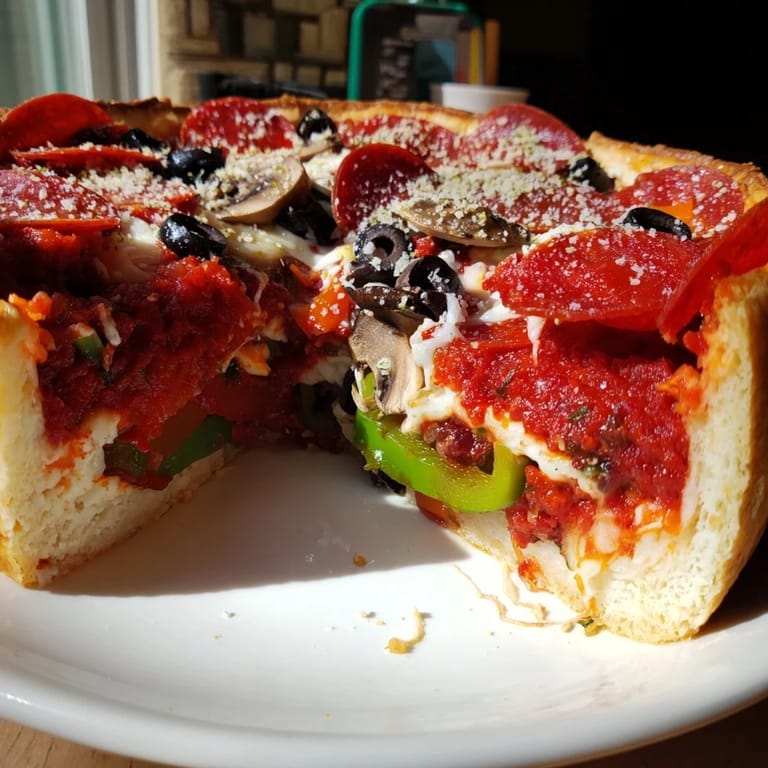
- Take your risen dough and gently stretch it to fit the pan, pushing it up the sides with your fingers to form high walls—don't worry about perfection. The dough should come up about an inch or so on the sides, which is what traps all that bubbling sauce and cheese.
- Layer the cheese foundation:
- Sprinkle the mozzarella evenly over the dough base, making sure to distribute it so every bite gets some cheese. This layer will start melting while you add toppings and create a barrier between dough and sauce.
- Add your toppings with intention:
- Scatter mushrooms, bell peppers, olives, and any meat you're using over the cheese layer in a somewhat even pattern—don't pile them high or they'll steam instead of caramelize. If using sausage, crumble it so it distributes better.
- Pour sauce and finish with Parmesan:
- Spread or pour the slightly cooled tomato sauce evenly over the toppings, then sprinkle grated Parmesan generously over the surface. The sauce should be warm but not hot when it goes on so it doesn't shock the yeast or cause uneven cooking.
- Bake until it's golden and bubbly:
- Bake for 35 to 40 minutes; you're looking for a golden brown crust and sauce that's actively bubbling around the edges. If the crust edges start browning too quickly before the center is done, loosely tent the top with foil.
- Rest before slicing:
- Let the pizza sit for about 10 minutes after it comes out of the oven—this allows the cheese to set slightly so it doesn't immediately slide off when you cut into it. The crust also continues cooking slightly from residual heat.
 Save to Pinterest
 There was an evening when someone told me this pizza reminded them of this place they went to in Chicago years ago, and for a moment I felt like I'd transported them somewhere. That's when I realized it wasn't really about perfection—it was about creating a moment where good food and good company intersect, and that happens every single time this comes out of the oven.
Why This Crust Works
The combination of olive oil and melted butter in the dough creates something that's richer than a typical pizza dough without being greasy or heavy—the butter browns slightly during baking and adds a subtle nuttiness, while the olive oil keeps everything tender. The cornmeal isn't just for show; it changes the crumb structure entirely, making it less dense and more open, and it prevents the bottom from ever getting soggy because it absorbs moisture and creates slight friction between dough and pan. This is also why you don't want to use a non-stick spray or cooking spray—you need that proper oil contact to create the crispy-edged, golden-bottomed masterpiece that makes deep dish worth making.
Building Flavor in Your Sauce
The sauce isn't complicated, but the order matters—blooming the garlic in oil before adding tomatoes allows it to release its sulfur compounds and transform into something sweet rather than harsh, and simmering for 20 minutes helps the oregano and basil fully hydrate so they're not just dried herb bits floating around. That small pinch of sugar isn't about making it sweet; it just balances the acidity of the tomatoes and makes all the other flavors pop. If you find your sauce tastes flat even after simmering, a tiny pinch more salt usually fixes it—salt amplifies everything else.
Making It Your Own
Once you understand how this pizza actually works, you can adapt it endlessly—swap the toppings, change the cheese blend, adjust the sauce seasoning—but the foundation is what matters. Some people use a blend of provolone and mozzarella for something sharper, others add fresh basil right before serving, and some swear by a splash of red pepper flakes in the sauce. The beauty of deep dish is that it's forgiving enough to handle experimentation while being structured enough to always deliver something delicious.
- If you're feeding vegetarians, the mushrooms and olives become your flavor backbone, so slice them generously and consider adding sun-dried tomatoes or roasted red peppers for depth.
- For a meat version, cook any sausage first and drain off excess fat, which prevents the pizza from becoming greasy.
- Make the sauce a day ahead if you can—it actually tastes better as flavors meld overnight, and you'll have one less thing to do on pizza day.
 Save to Pinterest
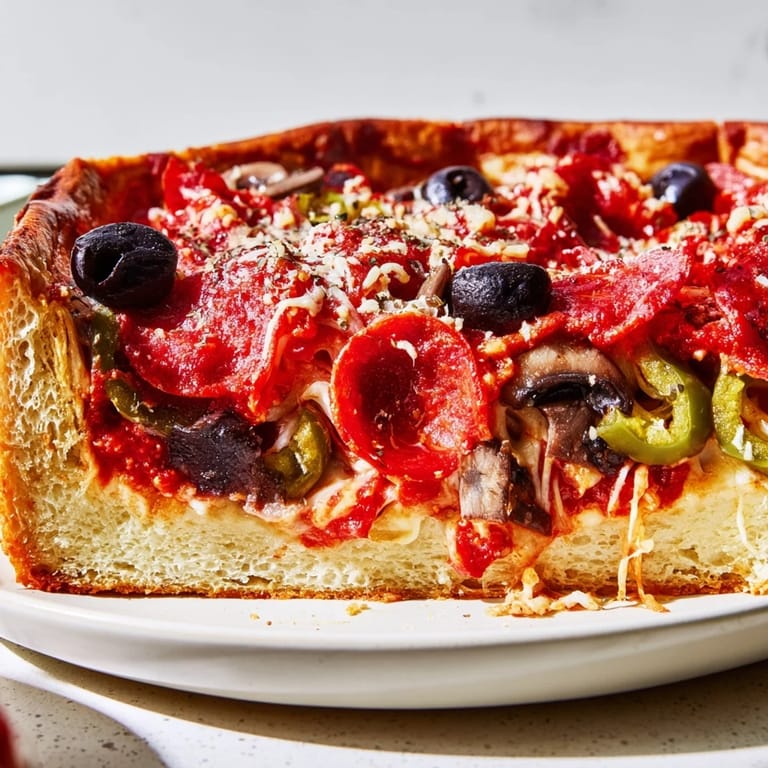
 Making deep dish pizza at home is less about following a formula and more about understanding why each component exists, and once you get that, you'll find yourself making it again and again. It's the kind of meal that tastes like someone cared enough to spend the time, and that feeling is exactly what keeps people coming back.
Recipe FAQs
- → How is the dough prepared for this deep dish?
The dough combines flour, cornmeal, yeast, salt, olive oil, warm water, and melted butter. It is kneaded until smooth and left to rise until doubled in size.
- → What ingredients create the sauce's signature flavor?
Crushed tomatoes simmered with garlic, dried oregano, basil, sugar, salt, and pepper form a flavorful and aromatic sauce.
- → Can this dish be made vegetarian?
Yes, simply omit meat toppings and increase the variety of vegetables like mushrooms, bell peppers, and olives for a satisfying meatless option.
- → What’s the ideal baking temperature and time?
Bake at 425°F (220°C) for 35–40 minutes until the crust is golden and the sauce bubbles, covering edges with foil if browning too fast.
- → Are there any recommended cheese variations?
For richer flavor, substitute part or all of the mozzarella with a blend of provolone and mozzarella cheeses.