 Save to Pinterest
 There's something oddly satisfying about discovering that pasta doesn't have to come from wheat to feel genuinely substantial. I was standing in the grocery aisle one afternoon, genuinely puzzled by the chickpea pasta option, when a neighbor stopped to chat about her recent shift toward plant-based eating. She mentioned tossing it with roasted vegetables and tahini, and something about that combination stuck with me. That night, my kitchen filled with the smell of roasting peppers and caramelizing onions, and I realized I'd found my new weeknight anchor.
I made this for my partner on a Tuesday when we'd both had rough days, and watching him take that first bite—how his expression softened—reminded me why cooking for someone else matters. He asked for the recipe immediately, which almost never happens. Now it's become our go-to when we want something that feels nourishing without being fussy.
Ingredients
- Chickpea pasta (340 g): This is your protein anchor and fiber foundation; it holds sauce better than regular pasta and keeps you satisfied longer.
- Zucchini (1 medium, diced): Roasting transforms zucchini from watery to almost creamy, especially if you give it space on the sheet.
- Red bell pepper (1, chopped): Sweet when roasted, and its bright color signals vitamins your body actually needs.
- Red onion (1 small, sliced): The slight bite mellows into caramel sweetness in the oven; don't skip this layer of flavor.
- Cherry tomatoes (1 cup, halved): They burst and concentrate their juice as they roast, creating little pockets of intensity.
- Olive oil (2 tablespoons): Good quality oil makes a real difference here since it's not being cooked down into a long sauce.
- Dried oregano (1 teaspoon): Oregano and roasted vegetables are old friends; this amount hits the balance perfectly.
- Smoked paprika (1/2 teaspoon): A small amount gives depth without announcing itself—this is the secret whisper in the roasted vegetables.
- Salt and black pepper: Taste as you go; roasted vegetables concentrate flavors, so you might need less than you think.
- Tahini (60 g): Raw and nutty, tahini becomes silky when whisked with lemon juice and warm water—the foundation of your sauce.
- Lemon juice (2 tablespoons): This is what makes tahini behave and transforms it from thick paste to creamy sauce.
- Maple syrup or agave (1 tablespoon): A touch of sweetness rounds out the tahini's earthiness and balances the lemon's brightness.
- Warm water (2 tablespoons, plus more): Start with this amount and add gradually; the sauce will thicken as it sits, so keep it pourable at first.
- Garlic (1 clove, minced): One clove is all you need since the tahini is delicate; more would overpower everything.
- Fresh parsley (2 tablespoons, chopped): The final green note that makes your bowl look alive and adds a fresh bite.
- Toasted sesame seeds (1 tablespoon, optional): If you use them, buy already toasted for the best nutty flavor and to save yourself a step.
Tired of Takeout? 🥡
Get 10 meals you can make faster than delivery arrives. Seriously.
One email. No spam. Unsubscribe anytime.
Instructions
- Heat your oven and prep:
- Set the temperature to 220°C (425°F) and line your baking sheet with parchment paper so nothing sticks and cleanup stays simple. This matters more than it sounds.
- Season and spread the vegetables:
- Toss your diced zucchini, chopped pepper, sliced red onion, and halved cherry tomatoes with olive oil, oregano, smoked paprika, salt, and pepper in a large bowl. Spread them in a single layer on the baking sheet, giving them room to breathe and roast rather than steam.
- Roast until edges catch color:
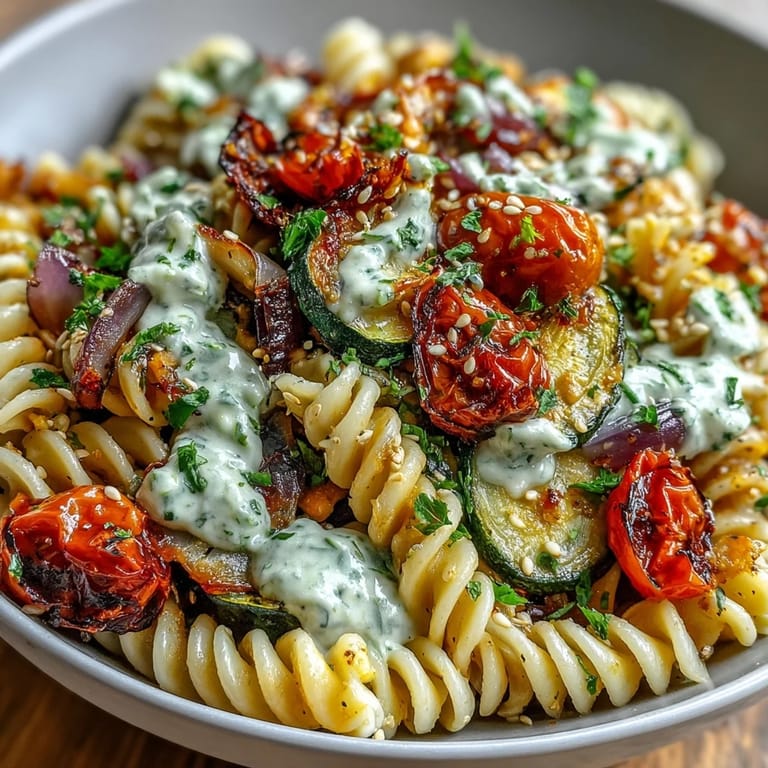
- Give this 20–25 minutes total, stirring once halfway through. You're looking for tender vegetables with slightly caramelized edges—that's where the sweetness lives. The zucchini should collapse slightly, and the tomatoes should burst.
- Cook the pasta while vegetables roast:
- Fill a large pot with salted water and bring it to a boil, then add your chickpea pasta and follow package instructions, which usually means 7–10 minutes. Drain but don't rinse; a little starch helps the sauce cling better.
- Make the tahini sauce:
- In a small bowl, whisk together tahini, lemon juice, maple syrup, minced garlic, and a pinch of salt. The mixture will seize up at first—that's normal. Pour in your warm water slowly while whisking constantly, and it'll transform into something creamy and pourable. If it's still thick, add another tablespoon of water and keep whisking.
- Bring it together:
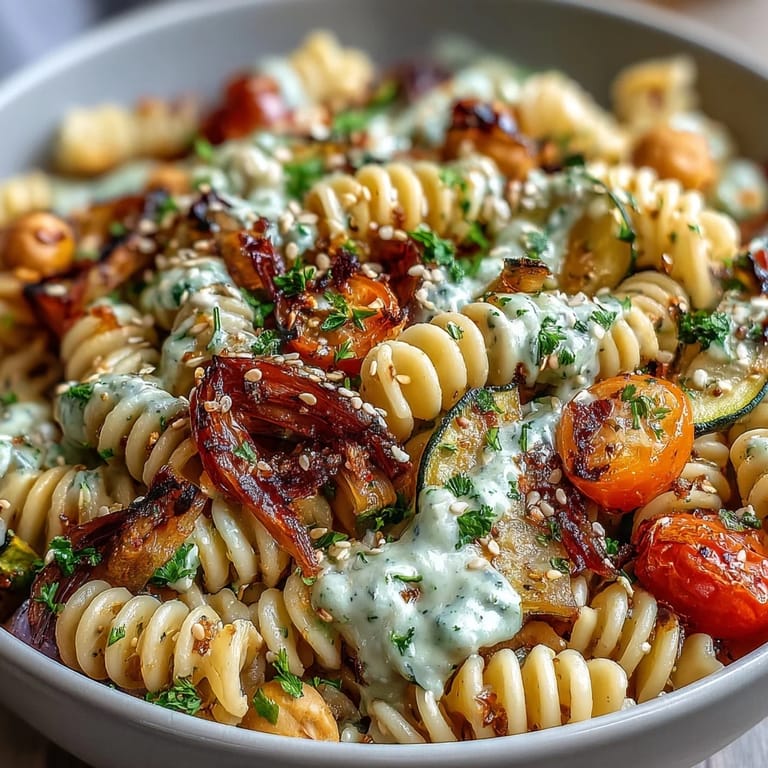
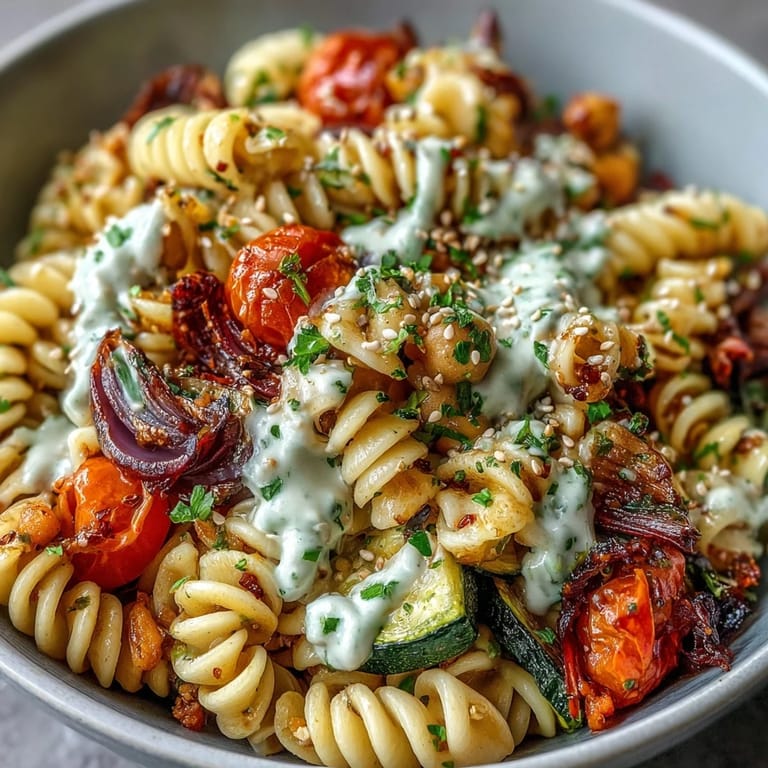
- Combine your hot pasta and roasted vegetables in a large mixing bowl, then drizzle generously with the tahini sauce. Toss gently so every strand and vegetable piece gets coated, being careful not to break apart the softer vegetables.
- Serve and garnish:
- Divide between bowls and scatter fresh parsley and sesame seeds on top. You can serve this warm straight away or let it cool to room temperature, which changes the flavor profile subtly but pleasantly.
 Save to Pinterest
 What surprised me most was how this bowl tasted even better the next day, when the tahini sauce had time to sink into everything and the flavors got to know each other. It became my favorite lunch to pack, something I'd look forward to instead of dread.
Why Chickpea Pasta Changes the Game
Chickpea pasta was a revelation that shifted how I think about plant-based eating. Regular pasta made me hungry an hour later, but chickpea pasta actually sustains you because it's built on legumes rather than refined grains. The texture is slightly nuttier and the bite is different—firmer, somehow more honest. Once you notice that difference, you can't unknow it.
The Tahini Sauce Secret
I used to think tahini was only for hummus, until I realized it's basically sesame butter waiting to become sauce. The lemon juice is what unlocks it, creating an emulsion that clings to pasta like it was made for this purpose. Warm water is your friend here; cold water makes the whole thing seize up and feel grainy, but warm water coaxes it into silk.
Roasting Vegetables Like You Mean It
The oven is doing something magical that a pan never could—it's concentrating sugars and building flavor through dry heat rather than steaming everything into submission. The key is giving vegetables actual space on that baking sheet; pile them on top of each other and you'll get disappointment instead of caramelization. Temperature matters too; 220°C gets those edges dark enough to taste sweet without burning anything.
- Stir halfway through so the bottom doesn't char while the top stays pale.
- Different vegetables roast at different speeds, so cutting things to roughly the same size keeps everything finishing together.
- Roasted vegetables taste even better after they cool slightly, so there's no shame in eating this bowl at room temperature on a warm day.
 Save to Pinterest
 This bowl taught me that plant-based eating doesn't mean sacrifice—it means building something intentional and whole. Make it once and you'll understand why it's become my reliable answer to 'what's for dinner.'
Recipe FAQs
- → Can I use regular pasta instead of chickpea pasta?
Yes, you can substitute whole wheat, gluten-free, or traditional pasta. Adjust cooking time according to package instructions and note that protein content will vary.
- → How do I store and reheat leftovers?
Store components separately in airtight containers for up to 4 days. Reheat vegetables and pasta gently, then add fresh sauce before serving. The tahini sauce can be kept refrigerated for up to a week.
- → What vegetables work best for roasting?
Zucchini, bell peppers, red onion, and cherry tomatoes roast beautifully together. You can also add eggplant, broccoli, cauliflower, or seasonal root vegetables like sweet potatoes.
- → Can I make the tahini sauce ahead?
Absolutely. Prepare the sauce and store it in the refrigerator for up to a week. It may thicken when cold—simply whisk in a teaspoon of warm water to reach desired consistency.
- → Is this suitable for meal prep?
Yes, this bowl is excellent for meal prep. Cook a batch of vegetables and pasta, store separately, and assemble with fresh sauce throughout the week for quick lunches or dinners.