 Save to Pinterest
 The first sign of rhubarb at the market always makes me think of sunlit kitchens and smudged glass measuring cups. Last year, a neighbor left a bag of crimson rhubarb stalks on my porch, and their tart aroma beckoned me to finally attempt these custard bars. I’d been meaning to try something where the juicy tang of rhubarb could meet the delicate buttery crunch of shortbread, and that afternoon I simply surrendered to curiosity. There’s a certain hush in the air just before you pour the custard over the jewel-bright rhubarb. Baking these bars could turn any Wednesday into a little spring celebration.
I brought a tray of these custard bars to a book club one breezy evening—everyone’s forks clinked as we argued over who’d take the last square. I learned to always cut them before bringing them out, just to save friendships. My friend Alyson confessed she’d never liked rhubarb until she tried these. It felt good seeing everybody savor something homemade, passing around sticky napkins and laughter. The bars were gone before the conversation turned to the book.
Ingredients
- Unsalted butter: Softening the butter first gives the crust that perfect flaky-tender texture—room temperature butter blends in like a dream.
- Granulated sugar: Used in both the crust and the filling, it balances the rhubarb’s tartness while giving the shortbread its golden finish.
- All-purpose flour: Accuracy matters here—I learned the hard way that even a little too much flour takes the crust from melt-in-your-mouth to tough.
- Salt: Just a pinch sharpens flavors in the crust and keeps the custard from being cloyingly sweet.
- Fresh rhubarb: Opt for firm, bright stalks; avoid the leafy tops and toss any that have a squeaky, woody texture.
- Large eggs: Whisking the eggs thoroughly sets up a beautifully silky custard—don’t rush this step.
- Heavy cream: This is what gives the custard its luxurious, satiny bite—don’t substitute with milk or you’ll miss out on richness.
- Pure vanilla extract: Never skip this; it subtly lifts the custard and brings out the rhubarb’s brightness.
- Powdered sugar (optional): A final dusting feels like finishing touches on artwork, but don’t overdo it or you’ll mask the fruit.
Tired of Takeout? 🥡
Get 10 meals you can make faster than delivery arrives. Seriously.
One email. No spam. Unsubscribe anytime.
Instructions
- Get Set Up:
- Preheat your oven to 350°F (175°C). Grease and line a 9x13 inch pan with parchment paper, letting the ends hang over for easy removal.
- Make the Shortbread Dough:
- With an electric mixer, cream the softened butter and sugar until pale and fluffy—listen for that gentle thwack in the bowl. Add in flour and salt, mixing just until a soft dough appears, resisting the urge to overmix.
- Press and Parbake:
- Press the dough snugly into the pan using your fingertips for an even layer; don’t forget the corners. Bake for 18 to 20 minutes until the edges just start to gold and the top is matte.
- Prep the Rhubarb:
- While the crust bakes, toss rhubarb pieces with sugar in a bowl. After a few minutes the rhubarb glistens with syrupy beads—set aside.
- Whisk the Custard:
- In a fresh bowl, beat eggs and sugar until glossy and smooth. Whisk in flour, cream, vanilla, and a pinch of salt until no streaks remain and the batter almost shimmers.
- Layer and Bake:
- Spread the sugared rhubarb evenly over the hot crust (those sweet tangy aromas start wafting up right now). Pour the custard gently over, and tip the pan if needed for even coverage.
- Finish Baking:
- Bake for 35–40 minutes until the custard puffs just a bit and sets with a faint golden blush—you’ll notice it doesn’t jiggle much in the center. Remove from oven and cool completely in the pan.
- Cut and Serve:
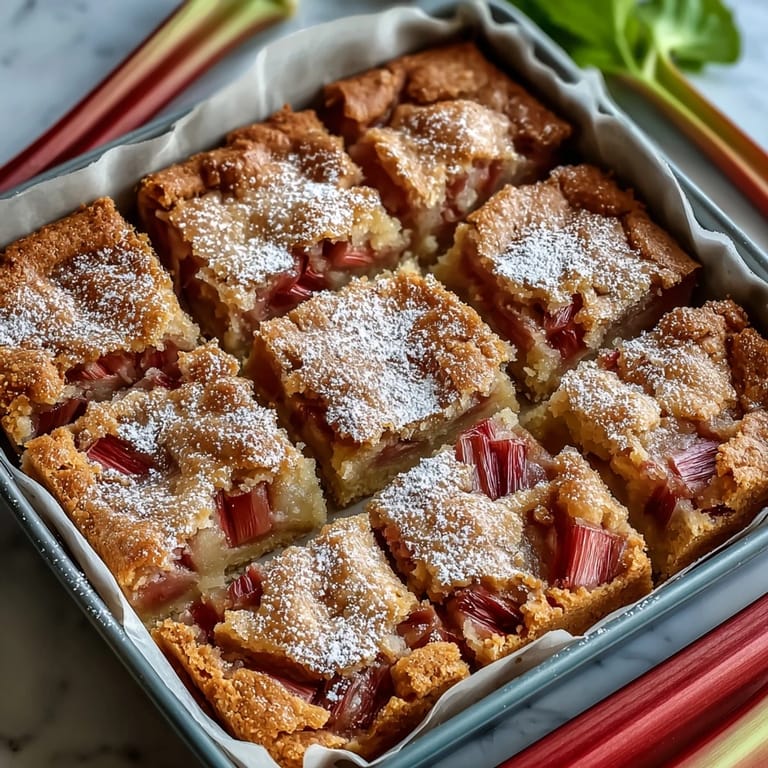
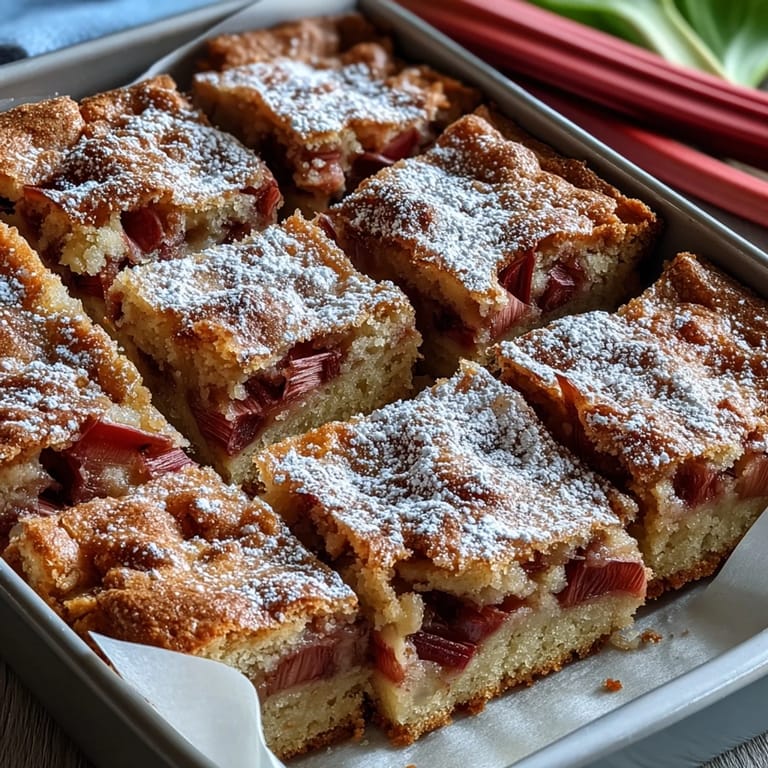
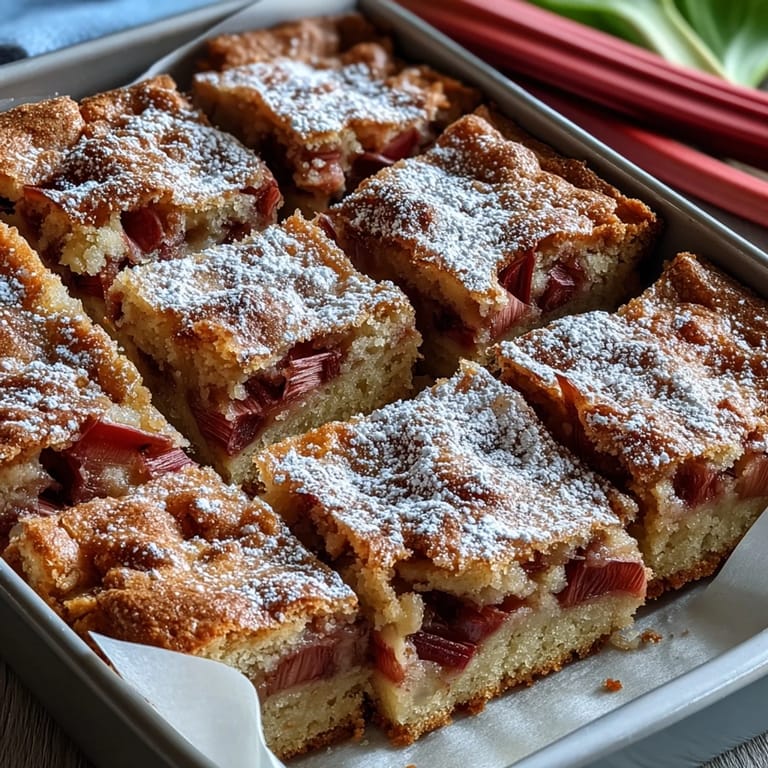
- Once cool, lift the bars using parchment handles; a heavy dusting of powdered sugar is bliss but totally optional. Slice into squares with a sharp knife and wipe the knife between cuts for clean edges.
 Save to Pinterest
  Save to Pinterest
 The last time I made these for brunch, my dad swooped into the kitchen just as the bars cooled. He snagged the scraggly end piece and shot me a sheepish grin, powdered sugar dusting his chin. I love how a pan of these bars invites people to drift into the kitchen, drawn by the scent of creamy custard and tangy fruit. They make a special occasion out of the ordinary, even if only a few people are gathered. That’s when I knew: this recipe was a keeper.
Shortbread Success: The Art of the Crust
Getting the crust right is what anchors these bars. If your butter isn’t truly softened, you risk an uneven crumb—it’s a lesson I learned after impatiently using cold butter once, which left chunks and tough spots throughout. Pressing the dough flat with lightly floured hands prevents sticky disasters, and always aim for the same thickness all round so it bakes evenly. The crust will finish pale—it shouldn’t be deeply golden or crumbly at this stage. Trust that it will set up more as it cools.
Bringing Out Rhubarb’s Best
I used to fret about how tart rhubarb could be, worrying if guests would find it too sharp. Tossing the fruit with a simple sprinkle of sugar and giving it time to macerate transforms it: those sour stalks soften and become ruby-bright, letting the custard mellow their zing. You can swap in half strawberries to bring a sweeter, softer flavor (my niece adores that tweak). Whatever you do, never add raw rhubarb straight—let it soak in the sugar so it bakes up juicy and fragrant. This tiny pause is worth every minute.
Custard Tricks and Easy Serving
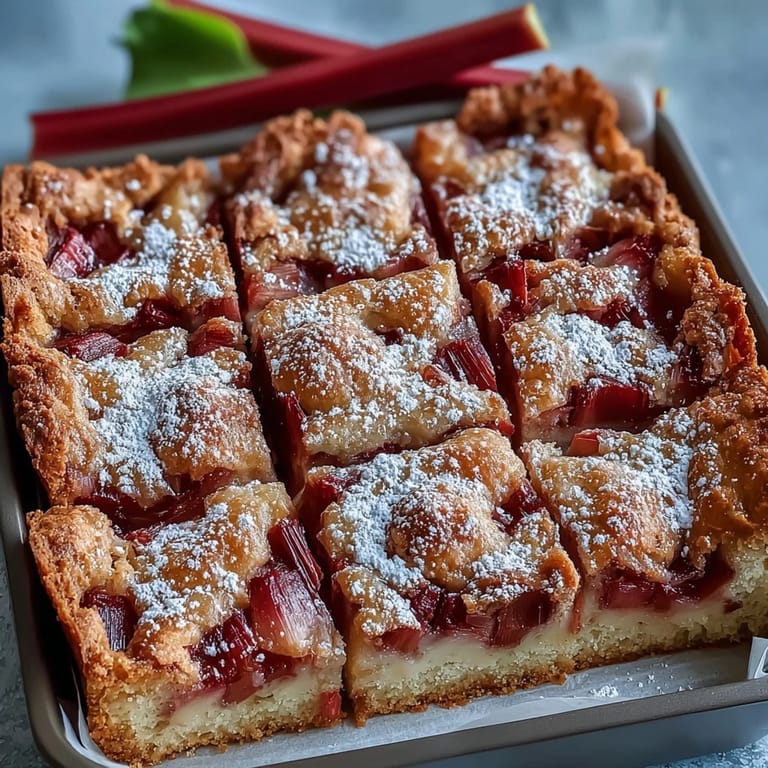
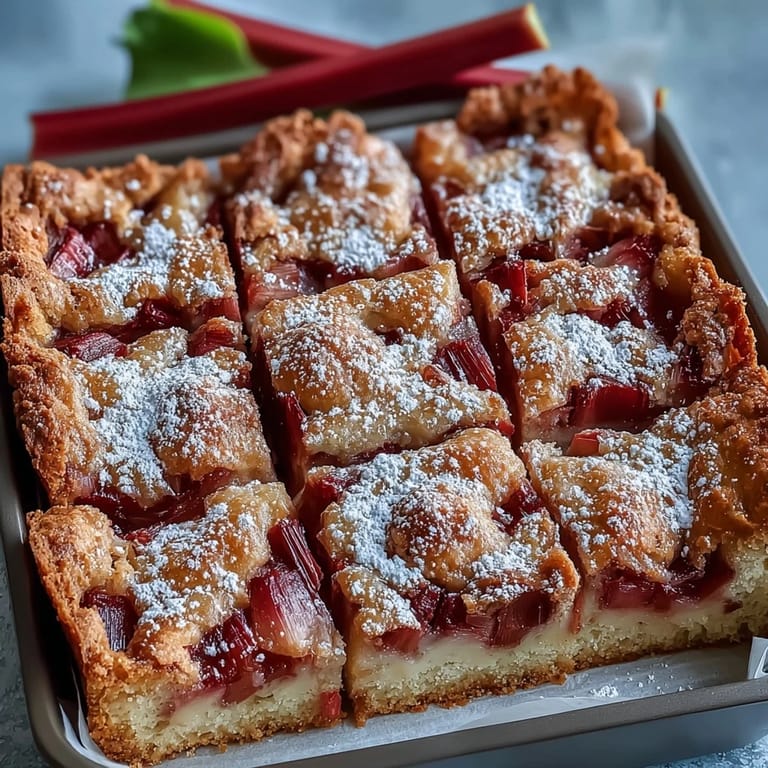
The most satisfying part of these bars is getting the custard filling just right—not too dense and never rubbery. Whisk steadily, making sure there are no flour lumps lurking in the batter; I find a momentary pause before pouring helps any bubbles rise and pop. Be patient while it bakes—the custard will wiggle a little but shouldn’t slosh when you gently shake the pan at the end. Letting the bars chill can feel like a test in willpower, but patience pays off with picture worthy slices and a creamy, dreamy bite.
- Don’t skimp on the cooling time or the custard will seep when you cut.
- Dust with powdered sugar just before serving to avoid a sticky surface.
- Wipe your knife between every cut for those perfect, clean bar edges.
 Save to Pinterest
  Save to Pinterest
 Baking with spring’s first rhubarb is a special kind of anticipation, and each slice is like a reward for your patience. However you serve them, these bars are the sort of quietly show stopping treat that turn everyday moments into memories.
Recipe FAQs
- → How can I tell when the custard is done?
The custard should be mostly firm with a slight jiggle in the center. Edges will be set and lightly golden; a toothpick inserted near the center may come out slightly moist but not liquid. Cooling in the pan finishes the set.
- → Can I use frozen rhubarb instead of fresh?
Yes. Thaw and drain frozen rhubarb well, then toss with the sugar and pat dry to remove excess liquid so the filling doesn't overly thin the custard.
- → How do I avoid a soggy shortbread crust?
Press the crust firmly and parbake until the edges are lightly golden. Spread the hot crust with the sugared rhubarb so juices begin to set, and pour the custard over while the crust is warm to help seal it.
- → What can I use instead of heavy cream in the custard?
Substitute whole milk combined with a bit of melted butter (about 2 tbsp butter per cup milk) for a richer result. The custard will be slightly less creamy than with heavy cream; avoid low-fat milk for best texture.
- → Is there an easy gluten-free option for the crust?
Swap the all-purpose flour for a 1:1 gluten-free flour blend and consider adding a tablespoon extra butter or an egg yolk to improve binding. Press firmly and watch baking time, as gluten-free crusts can brown faster.
- → How should leftover bars be stored and served?
Store bars airtight in the refrigerator for up to four days. They can be served chilled or brought to room temperature; if you prefer a softer custard, warm briefly in a low oven before serving.