 Save to Pinterest
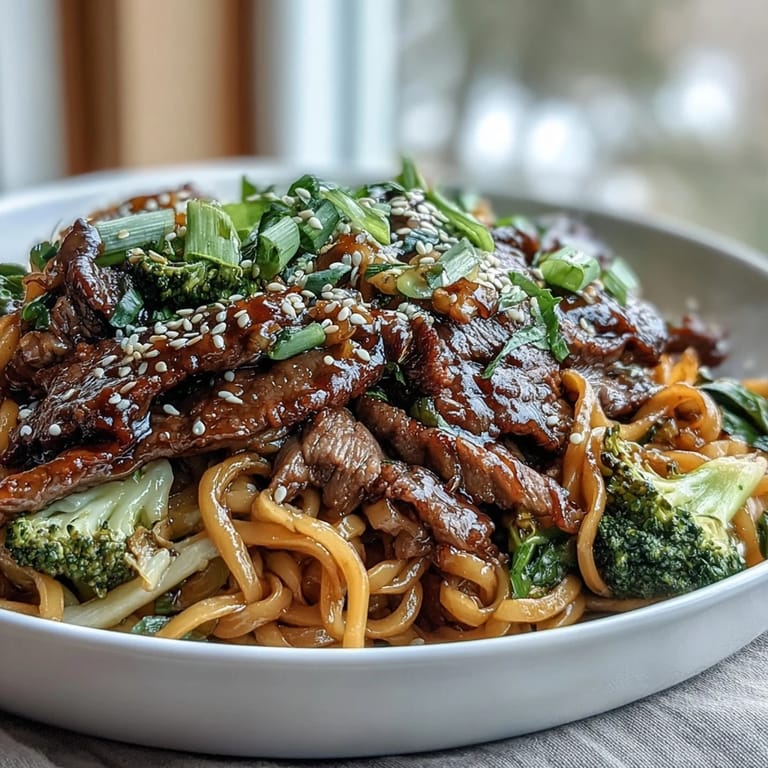
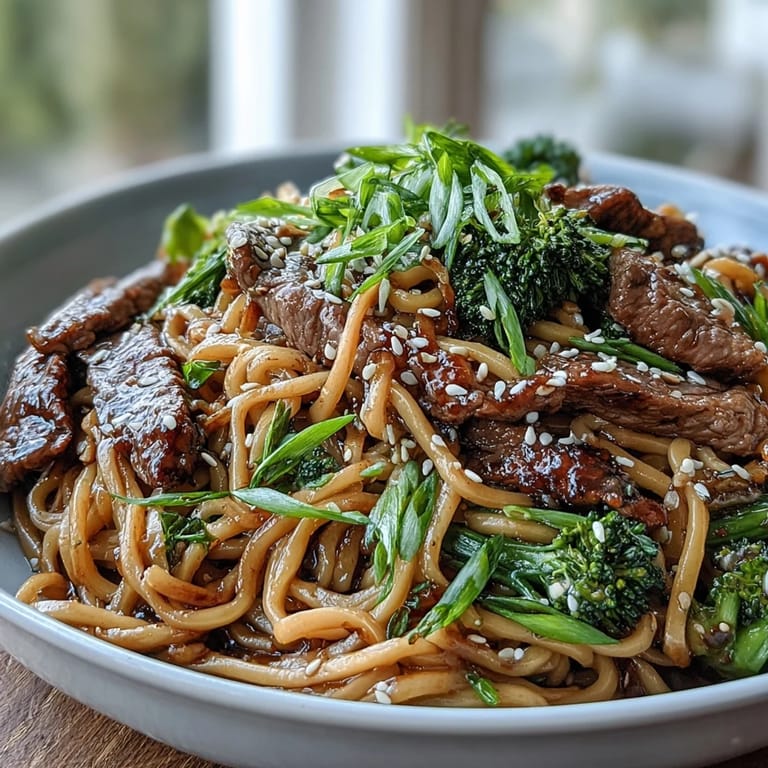
 My neighbor once knocked on my door holding a takeout container and asked if I could taste something she'd been trying to recreate from a tiny restaurant downtown. One forkful of those glossy noodles tangled with tender beef and I was hooked. We spent the next hour in her kitchen, tweaking garlic and brown sugar until we nailed it. Now I make this Korean beef noodle bowl on weeknights when I need dinner to feel like an event without the fuss.
The first time I served this to my family, my youngest picked out every green onion and then asked for seconds anyway. My husband stood at the stove with his bowl, twirling noodles on his fork and nodding like he'd discovered something important. That night taught me that a dish doesn't need to be complicated to become a regular request.
Ingredients
- Rice noodles: They turn silky and slippery when cooked, soaking up sauce better than wheat noodles and keeping the dish light.
- Flank steak: Slicing it thin against the grain keeps every bite tender, and it browns fast over high heat without drying out.
- Broccoli florets: They add a crisp, slightly bitter contrast to the sweet sauce and hold their shape during stir-frying.
- Bell pepper: Red or yellow brings sweetness and a pop of color that makes the bowl look as good as it tastes.
- Carrot: Julienned strips cook quickly and add a subtle crunch that balances the soft noodles.
- Green onions: Chopped on top, they give a fresh, sharp bite right before you dig in.
- Garlic and ginger: These aromatics bloom in hot oil and fill the kitchen with a scent that makes everyone wander in asking when dinner will be ready.
- Soy sauce: The salty backbone of the sauce, it deepens every flavor and coats the noodles with umami.
- Brown sugar: It melts into the soy sauce and balances the salt with a gentle sweetness that clings to the beef.
- Sesame oil: Just a tablespoon adds a nutty richness that makes the whole dish taste more complex.
- Vegetable oil: High smoke point means you can crank the heat and get a good sear on the beef without any burning.
- Sesame seeds: A sprinkle on top adds a toasty crunch and makes the bowl feel restaurant-special.
Tired of Takeout? 🥡
Get 10 meals you can make faster than delivery arrives. Seriously.
One email. No spam. Unsubscribe anytime.
Instructions
- Soften the noodles:
- Cook the rice noodles following the package timing, then drain them and set them aside so they stay loose and ready to toss. Don't skip rinsing if they start clumping.
- Heat your skillet:
- Pour the vegetable oil into a large skillet or wok over medium-high heat and let it shimmer before adding anything. A hot pan gives the beef a nice brown crust instead of steaming it.
- Sear the beef:
- Add the thinly sliced flank steak in a single layer and let it sit for a minute before stirring, then cook for another minute or two until browned. Pull it out and set it aside so it doesn't overcook while you work on the vegetables.
- Bloom the aromatics:
- Toss the minced garlic and grated ginger into the hot skillet and stir for about 30 seconds until the smell hits you. This step builds the flavor foundation for everything that follows.
- Stir-fry the vegetables:
- Add the broccoli, bell pepper, and carrot, then stir-fry for about five minutes until they're tender but still have a little snap. Keep them moving so they cook evenly and don't scorch.
- Mix the sauce:
- While the vegetables cook, whisk together the soy sauce, brown sugar, and sesame oil in a small bowl until the sugar dissolves. Taste it and adjust if you like it sweeter or saltier.
- Bring it all together:
- Return the beef to the skillet and pour the sauce over everything, stirring so each piece gets coated. The sauce will bubble and thicken slightly as it heats.
- Toss in the noodles:
- Add the cooked rice noodles and gently toss everything together with tongs or a spatula until the noodles are evenly coated and heated through, about two minutes. Be gentle so the noodles don't break apart.
- Garnish and serve:
- Sprinkle chopped green onions and sesame seeds over the top before you bring the skillet to the table. The fresh garnish adds color and a little sharpness that wakes up the whole bowl.
 Save to Pinterest
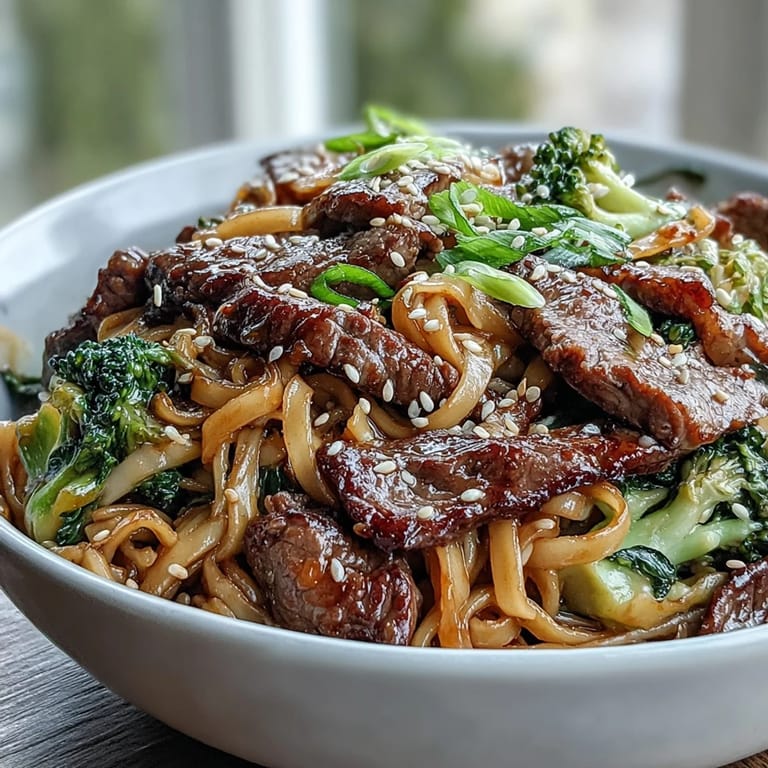
 One rainy Tuesday, I made this for a friend who'd just moved into a new apartment with an empty fridge. We ate it straight from the skillet with mismatched forks, and she said it tasted like the kind of meal that made a place feel like home. I think about that every time I hear the sizzle of garlic hitting hot oil.
Swapping the Protein
I've used chicken thighs, shrimp, and even pressed tofu in place of flank steak, and each version brings its own texture and flavor. Chicken stays juicy and mild, shrimp cooks in half the time, and tofu soaks up the sauce like a sponge. Just adjust your cooking time so nothing gets rubbery or dry, and you'll have a new favorite every week.
Making It Spicy
If you like heat, stir a spoonful of gochujang or a drizzle of sriracha into the sauce before you pour it over the beef and vegetables. The sweet-spicy kick plays beautifully with the brown sugar, and you can always serve extra hot sauce on the side for anyone who wants to dial it up. I once added too much and we all ate with napkins in hand, laughing through the tears.
Storing and Reheating
Leftovers keep in an airtight container in the fridge for up to three days, though the noodles may absorb some sauce and soften further. Reheat gently in a skillet with a splash of water or soy sauce to loosen everything up, or microwave in short bursts and stir halfway through. I sometimes add a handful of fresh greens when I reheat to brighten things up.
- Toss in snap peas, zucchini, or mushrooms if you want to stretch the vegetables or use what you have on hand.
- Check your soy sauce and noodle labels if you need this to be gluten-free, since some brands sneak in wheat.
- Taste the sauce before you pour it over everything so you can adjust sweetness or salt to your liking.
 Save to Pinterest
 This bowl has become my answer to busy evenings when I want something that feels special without the stress. I hope it brings you the same easy comfort it's given me, one slippery, savory forkful at a time.
Recipe FAQs
- → What cut of beef works best?
Flank steak is ideal due to its rich flavor and tender texture when sliced thinly against the grain. Sirloin or skirt steak also work well for this preparation.
- → Can I make this spicy?
Absolutely. Stir in sriracha or gochujang to the sauce mixture for authentic Korean heat. Start with one teaspoon and adjust to your preferred spice level.
- → What other vegetables can I add?
Snap peas, zucchini, mushrooms, or baby corn make excellent additions. Add them during the stir-fry stage, adjusting cooking time so they remain tender-crisp.
- → How do I prevent rice noodles from sticking?
Rinse cooked noodles under cold water after draining to remove excess starch. Toss them with a small amount of sesame oil before adding to the skillet.
- → Can I substitute the protein?
Sliced chicken breast, shrimp, or firm tofu work beautifully as alternatives. Adjust cooking times accordingly—chicken and shrimp need just 2-3 minutes, while tofu benefits from 4-5 minutes to develop golden edges.