 Save to Pinterest
 The first time I made California rolls at home, I was convinced I'd need some secret sushi chef training. But then a friend who worked at a casual sushi spot near her apartment showed me it's really just rice, nori, and whatever you've got in the fridge—wrapped with intention and a bit of patience. That night, I realized the magic wasn't in perfection; it was in the roll itself, that satisfying moment when everything clicks together and you've made something restaurant-quality in your own kitchen.
I made these rolls for a dinner party last summer, and what stuck with me wasn't the compliments—it was my friend Sarah quietly asking if she could help me make the next batch instead of sitting at the table. We ended up in the kitchen together for an hour, laughing at our slightly wonky rolls, dipping them in soy sauce, and she left asking for the recipe. That's when I knew this dish had become something I'd keep making forever.
Ingredients
- Sushi Rice (1 ½ cups): Use proper sushi rice, not regular white rice—it has just enough starch to hold together but stays tender.
- Water (2 cups): The ratio matters more than you'd think; too little and your rice cracks, too much and it's mushy.
- Rice Vinegar (2 ½ tbsp): This is the backbone of that authentic sushi flavor, so don't skip it or swap it for regular vinegar.
- Sugar (1 tbsp) and Salt (¾ tsp): Together they balance the vinegar and season the rice so every bite tastes right.
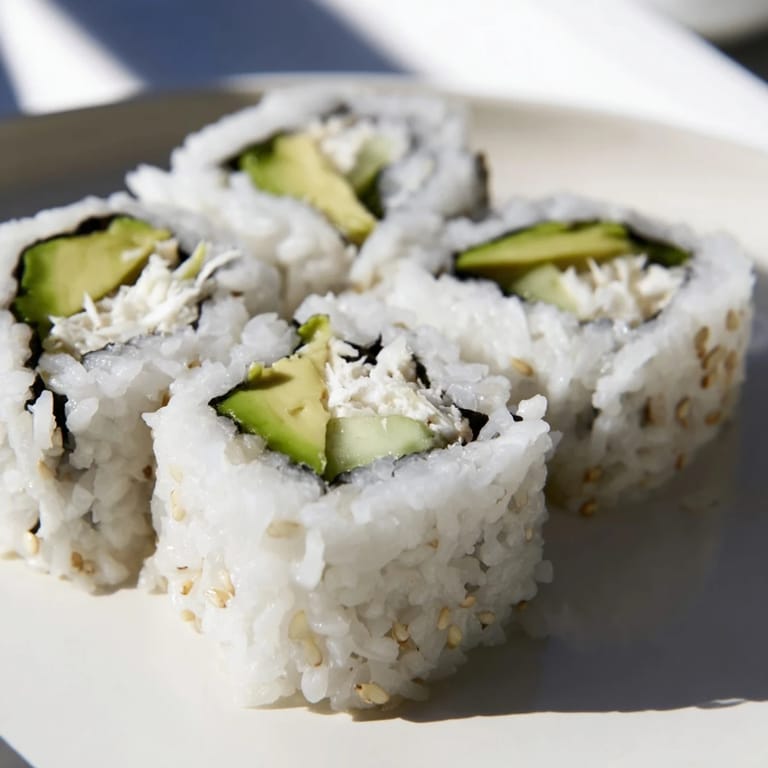
- Crabmeat or Surimi (120 g): Fresh lump crab is luxurious, but imitation crab works beautifully and is more forgiving if you're on a budget.
- Avocado (1 ripe one): Ripeness is everything here—too hard and it won't slice cleanly, too soft and it falls apart during rolling.
- Cucumber (½): The crunch is essential; it keeps each bite interesting and cuts through the richness of the avocado.
- Nori (4 sheets): Buy the kind meant for sushi rolling, and store it in an airtight container so it stays crispy.
- Toasted Sesame Seeds (2 tbsp): Toast them yourself if you can—the aroma alone is worth it, and they taste fresher.
- Mayonnaise (optional, 2 tbsp): A thin line adds creaminess and helps bind the filling together.
Tired of Takeout? 🥡
Get 10 meals you can make faster than delivery arrives. Seriously.
One email. No spam. Unsubscribe anytime.
Instructions
- Prepare Your Rice:
- Rinse the sushi rice under cold water, swirling it with your fingers until the water runs clear—this removes excess starch and prevents gluiness. Cook it with the measured water, then let it steam under the lid for 10 minutes after you turn off the heat; this final resting period is where the magic happens.
- Season the Rice:
- Dissolve the rice vinegar, sugar, and salt together first, then fold this mixture gently into the warm rice using a cutting motion rather than stirring, which can bruise the grains. Spread the rice on a plate to cool while you prep your fillings.
- Set Up Your Rolling Station:
- Cover your bamboo mat with plastic wrap so the rice doesn't stick to it, then place the shiny side of the nori facing down. Wet your hands slightly—this prevents the rice from clinging to your fingers.
- Spread the Rice:
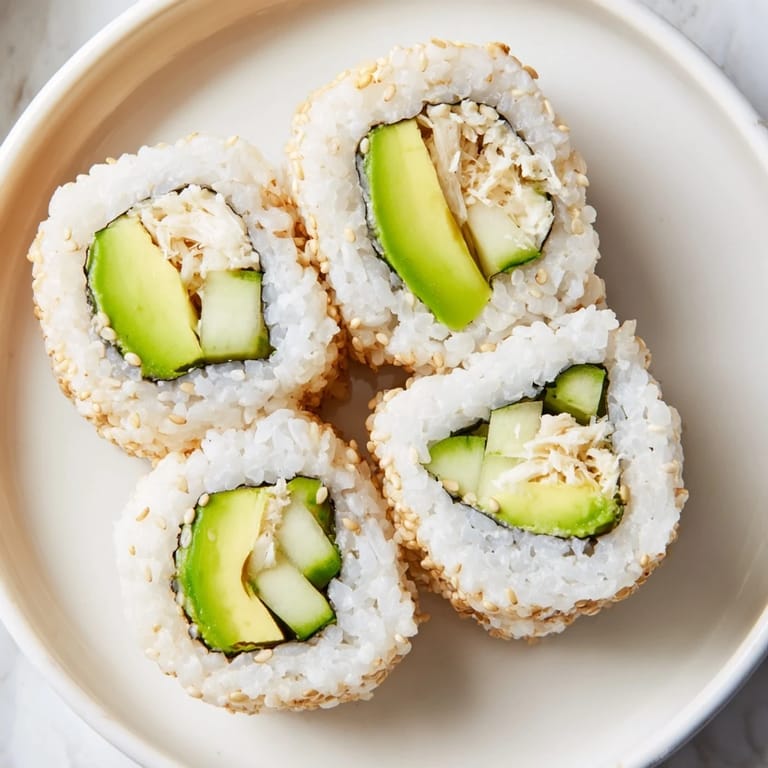
- Use your wet fingers to spread about ¾ cup of rice evenly across the nori, leaving a 2 cm border at the top (this is where you'll seal it). Sprinkle sesame seeds over the rice while it's still sticky so they adhere properly.
- The Flip:
- Carefully flip the entire thing so the rice side is now facing down on the mat and the nori is facing up; this takes nerve the first time, but it works.
- Add Your Fillings:
- Arrange the crab, avocado, and cucumber in a thin, even line along the bottom edge of the nori. If using mayo, add just a thin drizzle—less is more, or everything will slide out as you roll.
- Roll It Tight:
- Using the edge of the mat closest to you, roll the nori tightly over the filling, pressing gently as you go to keep everything snug. Use the mat to shape as you roll, lifting it away as you continue forward until you've sealed the edge with a little water.
- Slice and Serve:
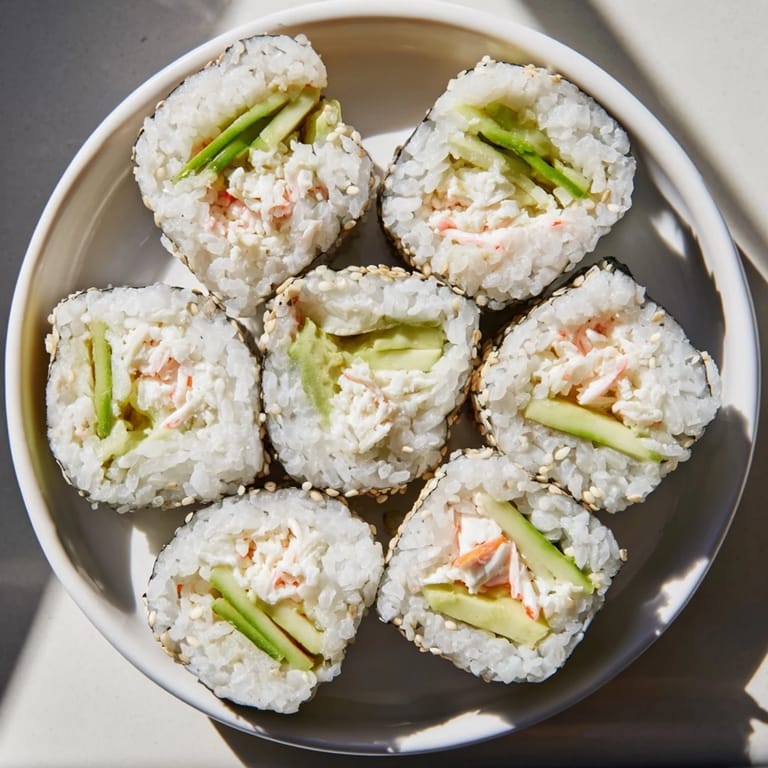
- Use a very sharp, damp knife and slice in one smooth motion rather than sawing; wet the blade between each cut so the rice doesn't stick to it. Repeat with your remaining ingredients, and arrange on a plate with soy sauce, pickled ginger, and wasabi.
 Save to Pinterest
 There's something almost meditative about rolling sushi—the repetition, the focus required, the way your hands start to remember the motion after the first couple rolls. I've noticed that the moment you stop overthinking it and just let your hands move, that's when the rolls come out perfect. It's the same with so many things in the kitchen, actually.
Choosing the Right Nori
Not all seaweed sheets are created equal, and this was a hard lesson I learned after buying the cheapest option at the grocery store. Good nori should be dark green, crispy, and smell pleasantly oceanic—a slightly fishy aroma means it's fresh. Store it in an airtight container away from moisture, because humidity is the enemy; I keep mine in a small resealable bag with a silica packet, and it stays perfect for months.
Making It Your Own
Once you're comfortable with the basic roll, you'll start experimenting, and that's when it gets fun. I've made versions with crispy tempura shrimp, spicy mayo mixed with sriracha, thin slices of cooked salmon, or even just cucumber and pickled vegetables for a vegetarian version. The structure stays the same—rice, nori, fillings—but the possibilities expand once you understand how the components work together.
Serving and Storage Tips
California rolls taste best within an hour of rolling, when the nori is still crispy and everything is at its peak texture. If you need to make them ahead, leave the rolls intact and slice them just before serving. Store any leftovers in an airtight container in the fridge for up to a day, though they'll soften—still delicious, just a different texture.
- Serve with ice-cold soy sauce, pickled ginger to cleanse your palate between bites, and wasabi for heat.
- Pair with sake, crisp white wine, or simply ice water to let the flavors shine.
- Cut each roll into six even pieces for that restaurant-style presentation.
 Save to Pinterest
 These rolls remind me that some of the best things to eat come from understanding a few simple techniques and then making them your own. Once you've made your first batch, you'll be surprised how easy it becomes.
Recipe FAQs
- → What type of rice is best for this roll?
Sushi rice, a short-grain variety seasoned with rice vinegar, sugar, and salt, provides the sticky texture needed to hold the roll together.
- → Can imitation crab be used?
Yes, imitation crab (surimi) works well and offers a convenient alternative to cooked crab meat.
- → How do I prevent the rice from sticking to my hands?
Wet your hands with water before handling the rice to keep it from sticking while spreading it on the nori.
- → What is the purpose of the bamboo mat?
The bamboo mat helps in rolling the ingredients tightly and evenly to create a compact roll shape.
- → How should the roll be sliced for serving?
Use a sharp, damp knife to slice the roll cleanly into six equal pieces without squashing.