 Save to Pinterest
 There's something about the sound of a hot wok that makes me cook faster. One weeknight, I was standing in front of my stove with a pound of flank steak and a head of broccoli, honestly just trying to get dinner on the table before anyone got hangry. That's when this beef and broccoli came together—quick, fragrant, and somehow more satisfying than anything I'd planned. Now it's the dish I reach for when I want something that tastes restaurant-quality but doesn't require any real fuss.
I made this for a friend who'd just moved back to the city, and we ate it straight from the wok while catching up. She said it tasted like the place we used to go to in Chinatown, and I realized that's exactly what I'd been chasing—that moment when takeout tastes like home because someone made it with care.
Ingredients
- Flank steak: Slice it thin and against the grain so every bite is tender, not chewy. A good tip is to partially freeze the meat for about 30 minutes first, which makes slicing so much easier.
- Cornstarch: This is what makes the beef silky and helps the sauce stick to everything. It's a small thing that changes everything.
- Soy sauce: The backbone of the whole dish. Use a good one if you can, because the quality really shows up here.
- Broccoli florets: Cut them roughly the same size so they cook evenly and stay bright green instead of turning to mush.
- Garlic and ginger: Mince them fine so they distribute throughout the dish and hit you with flavor in every bite.
- Oyster sauce: It adds umami depth that makes people ask what your secret ingredient is. It's not a secret, it's just this.
- Sesame oil: A little goes a long way. It's the finishing note that makes this taste authentically restaurant-made.
- Rice: Jasmine or long-grain both work beautifully as your base.
Tired of Takeout? 🥡
Get 10 meals you can make faster than delivery arrives. Seriously.
One email. No spam. Unsubscribe anytime.
Instructions
- Prepare the beef:
- Toss your sliced beef with soy sauce and cornstarch in a bowl, stirring to coat everything evenly. This 10-minute wait is worth it because it seasons the meat and helps it cook up tender.
- Mix the sauce:
- Whisk all your sauce ingredients together in a small bowl until the brown sugar dissolves and everything's smooth. Set it aside so it's ready to go when you need it.
- Cook the broccoli first:
- Heat one tablespoon of oil in your wok or skillet over high heat until it's shimmering. Add the broccoli and stir-fry for 2–3 minutes, tossing it around so it stays bright green and just barely tender. You'll know it's done when it smells sweet and nutty.
- Sear the beef:
- Add the remaining oil to the pan and let it get hot. Lay your beef in a single layer and let it sit undisturbed for a minute so it gets a proper sear, then stir-fry for 2–3 minutes until it's browned on the outside and nearly cooked through.
- Build the flavor:
- Add your minced garlic and ginger and stir constantly for about 30 seconds. This is when your kitchen will smell incredible—that's your signal you're doing it right.
- Bring it together:
- Return the broccoli to the pan, pour in your sauce, and stir everything to coat. Let it cook for 1–2 minutes, stirring gently, until the sauce thickens and clings to the beef and broccoli like it was meant to be there.
- Serve:
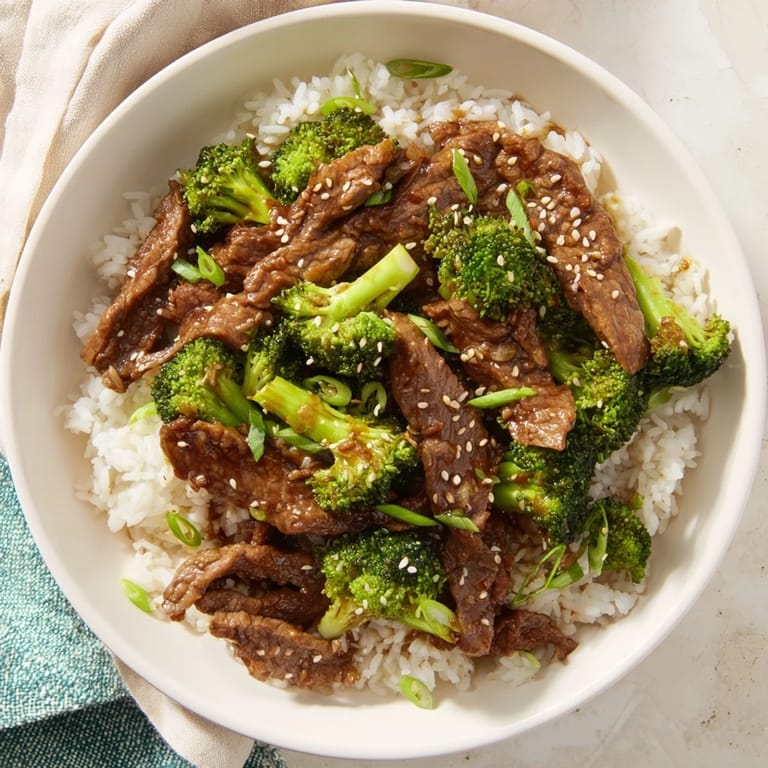
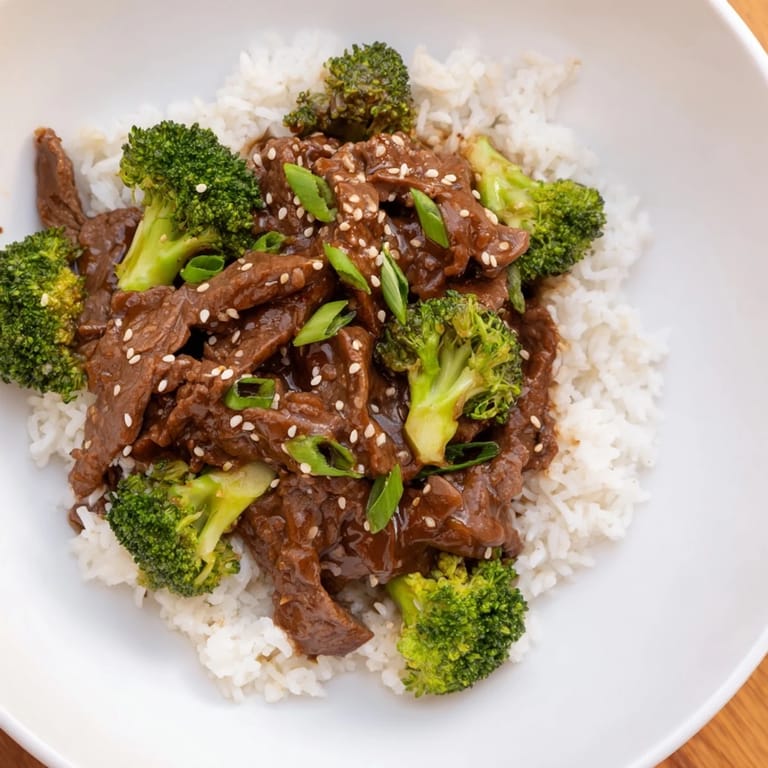
- Spoon everything over your hot rice and finish with sesame seeds and sliced spring onions if you have them.
 Save to Pinterest
 I remember my mom watching me make this once and saying it was the first time I'd cooked something she actually wanted to order from a restaurant. That compliment meant more than any recipe rating ever could.
Why This Works So Well
The magic here is in the timing and the heat. A hot pan means the beef gets a proper sear without drying out, and the broccoli stays crisp instead of turning into sad, mushy vegetables. The sauce is balanced enough that you don't need to adjust it—it's savory but not overly salty, slightly sweet but not cloying, and the sesame oil ties everything together with this subtle, toasty note that lingers.
Making It Your Own
This recipe is forgiving enough that you can play with it. I've added a splash of rice wine for extra depth, thrown in red chili flakes when I wanted heat, and even swapped in chicken or tofu when I didn't have beef on hand. Each version tastes different but equally good, which is the sign of a solid foundation.
Small Details That Matter
The difference between good and great stir-fry is usually just paying attention—making sure your oil is hot before things go in, not stirring constantly because sometimes ingredients need a moment to develop flavor, and tasting as you go so you know what you've got. It's also about having everything prepped before you start cooking, because once the wok's hot, there's no time to chop.
- Keep your ingredients within arm's reach before you start cooking, because once things are moving, they move fast.
- If your sauce seems too thick after cooking, add water a tablespoon at a time to loosen it up.
- Serve immediately while everything's hot and the broccoli still has that bright color and slight crunch.
 Save to Pinterest
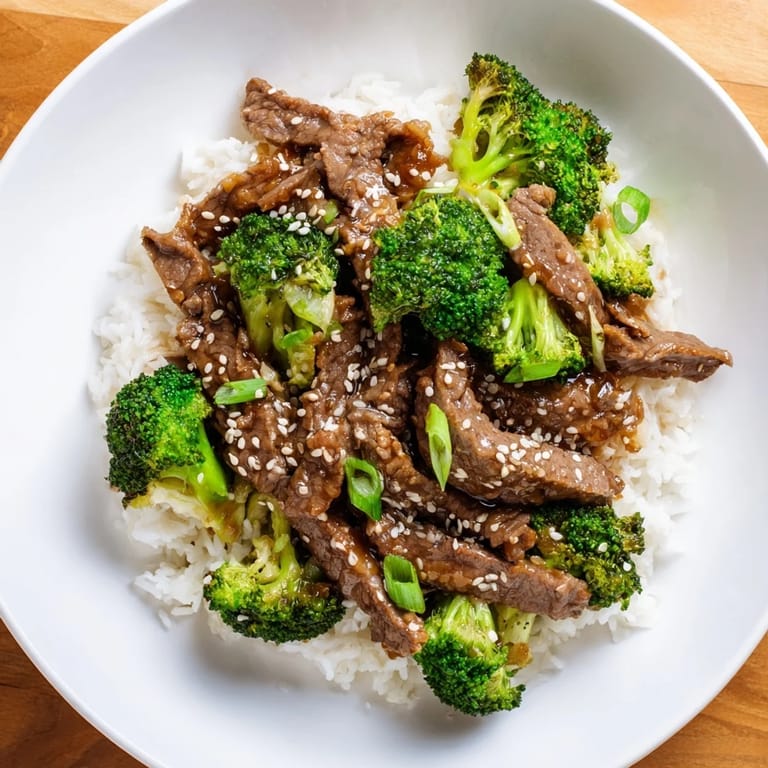
 This is the kind of dish that reminds you why cooking at home matters. It's faster than delivery, tastes better, and you get to eat it hot from the pan.
Recipe FAQs
- → How do I keep the beef tender?
Marinate the beef slices in soy sauce and cornstarch for at least 10 minutes. This helps break down proteins, making the meat tender and ensuring it remains juicy after stir-frying.
- → What’s the best way to cook broccoli for crispness?
Stir-fry the broccoli separately for 2-3 minutes until bright green and just tender. This keeps it crisp and preserves its vibrant color before adding it back to the pan.
- → Can I substitute the oyster sauce?
Yes, you can use tamari or a gluten-free soy sauce alternative if avoiding allergens or gluten. This will slightly alter the flavor but keeps the dish balanced.
- → What rice pairs well with this dish?
Steamed jasmine or long-grain rice is ideal as it absorbs the sauce well and offers a fragrant, fluffy base that complements the stir-fry flavors.
- → How can I add more heat or flavor?
For extra kick, add chili flakes or a splash of rice wine to the sauce. These enhance depth and spice without overpowering the core ingredients.