 Save to Pinterest
 There's something about poke bowls that stops me mid-week rush. My first one was actually an accident—I'd bought beautiful sushi-grade salmon for a dinner that fell through, and I found myself standing at the kitchen counter with this pristine fish, a half-empty bottle of sesame oil, and absolutely no plan. I threw together what I thought was a marinade, spooned it over the salmon, and somehow ended up with something that felt both indulgent and impossibly simple. Now I make them whenever I want to feel like I'm eating something special without the stress.
I made this for my sister on a warm Sunday afternoon when she showed up with that particular kind of hunger that says she's been skipping meals again. Within 20 minutes, we were both sitting on the porch with these colorful bowls, and she went quiet in that way people do when food is actually hitting right. She texted me the recipe a week later asking if I remembered exactly how I'd done it—turns out it wasn't an accident at all, it was just the right thing at the right moment.
Ingredients
- Sushi-grade salmon or tuna (400 g): This is non-negotiable—it's the star, so quality matters more than quantity, and asking your fishmonger for sushi-grade ensures it's safe to eat raw.
- Soy sauce (2 tbsp): The backbone of your marinade, salty and deeply savory in a way that regular salt just won't do.
- Sesame oil (1 tbsp): A little goes a long way; this is concentrated flavor that rounds out the salty edges of soy sauce.
- Rice vinegar (1 tbsp for marinade, 2 tbsp for rice): Bright and gentle acidity that doesn't overpower like distilled vinegar would.
- Honey or agave (1 tsp): Just enough sweetness to balance the salt and cut through the richness of the fish and sesame oil.
- Fresh ginger (1 tsp grated): Grate it right before mixing—the fresh heat is what makes the marinade come alive.
- Sesame seeds (1 tbsp for marinade, 1 tbsp toasted for topping): Toasting the finishing seeds brings out their nuttiness in a way that raw ones can't quite match.
- Sushi rice or short-grain rice (320 g): The starchiness matters here—sushi rice's sticky quality holds everything together like it's supposed to.
- Water (480 ml): The ratio of water to rice is everything; too much and you've got mush, too little and you've got crunchy disappointment.
- Avocado (1 ripe one): Slice it just before assembling so it doesn't brown and lose that buttery appeal.
- Cucumber (1 medium): The cool, crisp contrast that keeps your mouth from getting overwhelmed by the richer elements.
- Carrots (2 medium, julienned): Sweet, crunchy, and the color is half the point of making this look beautiful.
- Edamame (100 g): Protein and a little pop of texture; frozen ones are honestly just as good as fresh once they're cooked.
- Radishes (4), spring onions (2): These are the sharpness that keeps everything from feeling too mellow—don't skip them.
- Nori sheets: Cut into thin strips and sprinkle on at the last second so they stay crispy instead of getting soggy from the rice.
- Spicy mayo (4 tbsp): Mix regular mayo with sriracha to taste—it's your flavor insurance and the thing people remember.
Tired of Takeout? 🥡
Get 10 meals you can make faster than delivery arrives. Seriously.
One email. No spam. Unsubscribe anytime.
Instructions
- Start with the rice—it's the foundation:
- Rinse your rice under cold running water, moving it gently between your fingers until the water runs clear; this removes the starch that would otherwise make it gluey. Combine with water in a saucepan, bring to a boil (you'll hear it before you see it), then cover, reduce heat to low, and let it simmer for exactly 15 minutes—resist the urge to peek.
- Let it steam and settle:
- Remove from heat and leave the lid on for 10 minutes; this finishing steam makes the rice fluffy and lets the grains separate. Stir in your rice vinegar, sugar, and salt while it's still warm so the grains absorb those flavors evenly.
- Build your marinade while rice cools:
- In a bowl, whisk together soy sauce, sesame oil, rice vinegar, honey, and ginger until it looks emulsified and smells incredible. The sesame seeds go in at the end so they don't absorb too much liquid and lose their texture.
- Give your fish its 10-minute transformation:
- Add your diced sushi-grade fish to the marinade, toss gently—you're coating, not mashing—and let it sit in the refrigerator; the acid starts to gently cure the fish while the flavors meld. This is when you can prep everything else without feeling rushed.
- Slice and arrange your toppings:
- Avocado gets sliced right before assembly so it doesn't brown, cucumber and radishes are wafer-thin for that delicate crunch, carrots julienned for elegance, and spring onions on the bias so they look intentional. If your edamame aren't already cooked, boil them for 5 minutes until they're tender but still bright green.
- Assemble like you're creating something people will photograph:
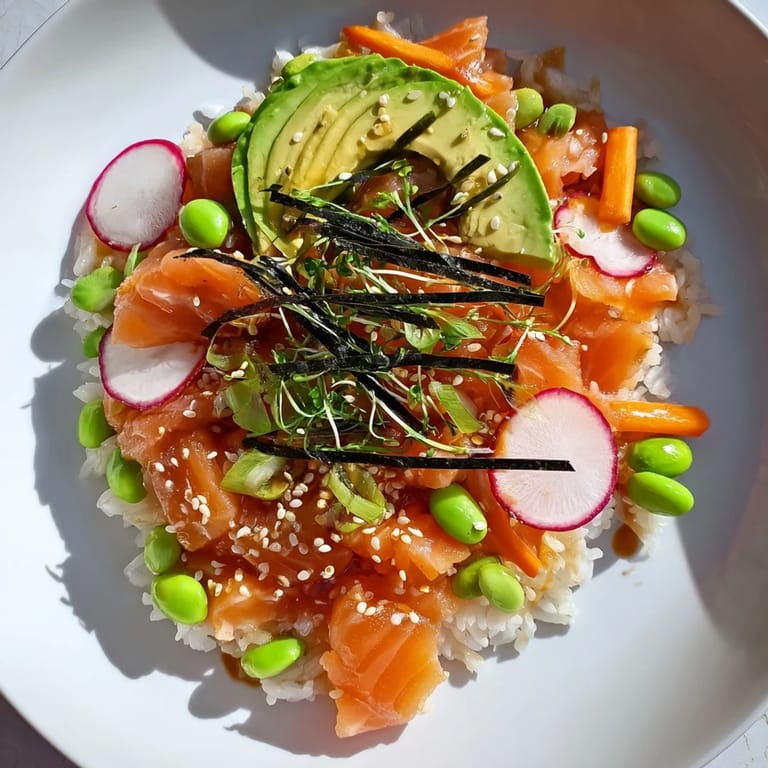
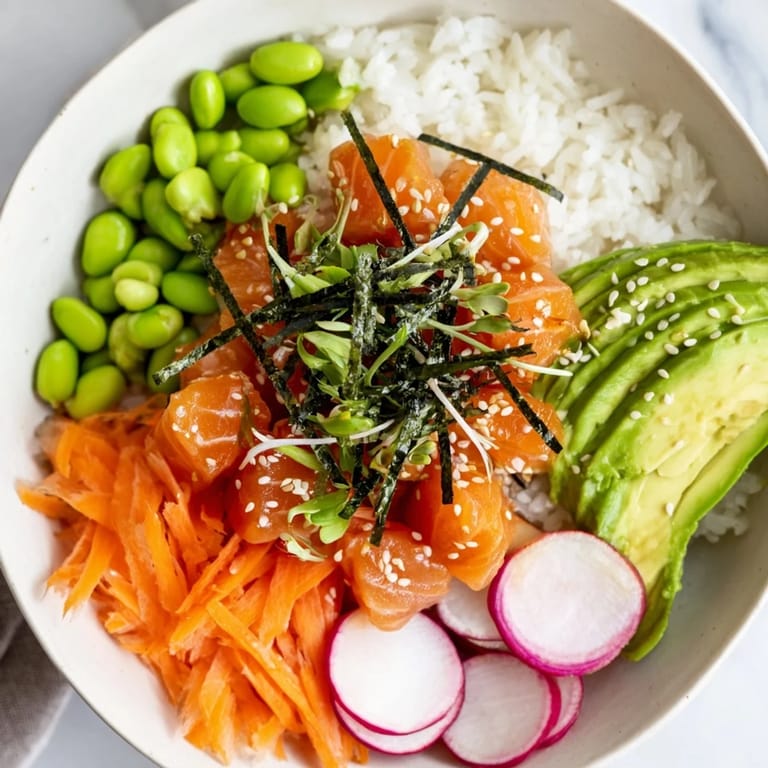
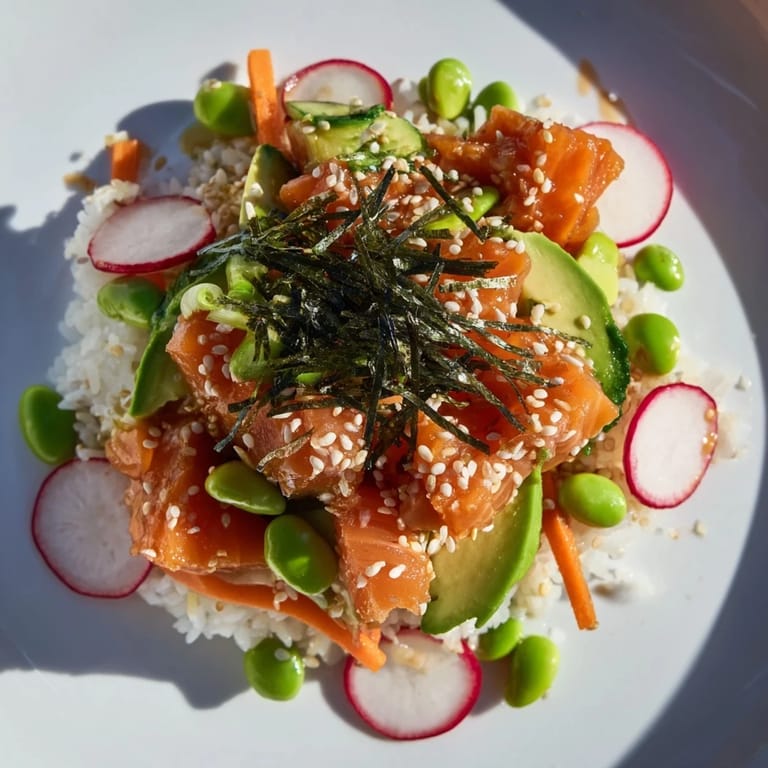
- Divide cooled rice among four bowls, creating a slight well in the center, then arrange your marinated fish in the middle and arrange vegetables in sections around it—the visual appeal is part of the experience. Top with nori strips cut thin enough that they stay crispy, toasted sesame seeds, and microgreens if you have them.
- Finish with the flavors that make it sing:
- Drizzle spicy mayo in a zigzag pattern, add a splash of extra soy sauce to taste, and set lime wedges and pickled ginger on the side for people to adjust as they eat. Serve immediately while the nori is still crispy and everything is at its intended temperature.
 Save to Pinterest
 The real magic happened when a friend who normally orders takeout watched me pull this together and realized it was within reach for her own kitchen. She made it for a date night and told me later that he thought she'd brought it from a restaurant—which means the only real secret is that there is no secret, just intentionality about ingredients and a little respect for technique.
Why the Marinade Matters More Than You Think
The first time I made poke, I thought the marinade was just flavor—a nice coating for the fish. But then I learned that the acid in rice vinegar and the enzymes in ginger are actually doing something; they're gently breaking down the proteins in the fish and creating a texture that's silky and tender in a way that raw fish alone never is. The soy sauce adds umami depth that makes your mouth water before you even taste it, and the sesame oil brings this warm, nutty richness that somehow makes the whole bowl feel more luxurious than the sum of its parts. I'll never think of poke marinade as optional again.
Making It Your Own Without Losing the Plot
The beauty of poke is that it's genuinely flexible, but there's a difference between creative customization and just throwing toppings together. I learned this when I got ambitious and added mango, pineapple, crispy shallots, and three different sauces to one bowl—it became more of a texture clash than a meal. Now I follow a loose rule: keep your base (rice and fish) solid, pick three to four vegetables maximum, choose one sauce that speaks to you, and stop before it looks crowded. The bowl should tell a story, not a encyclopedia. Seasonal vegetables like cucumber in summer or roasted beets in fall feel more intentional than just opening the crisper and throwing everything in.
The Small Details That Keep Everything From Falling Apart
There are a few moments in poke bowl assembly where the difference between good and forgettable shows up. One is using truly cold plates if you have time—warm bowls will start cooking your fish and melting your avocado before you even sit down. Another is understanding that every element works best at its intended temperature: the rice should be warm but not hot, the fish should be cold, the vegetables should be crisp from the refrigerator, and the sauce should be at room temperature so it has flavor presence.
- Taste your marinade before adding the fish—if it's not salty and interesting enough on its own, the fish won't carry the flavor you're hoping for.
- Set up your toppings on a cutting board in the order you'll use them so assembly feels smooth instead of chaotic.
- If you're making this ahead, marinate the fish up to 2 hours maximum, keep rice and vegetables separate until serving time, and add nori strips just before eating.
 Save to Pinterest
 This bowl exists in that beautiful space between effort and ease, where you look like you've been thinking about feeding people all day but you've really just spent 40 minutes being intentional. That's the kind of meal that makes people feel cared for.
Recipe FAQs
- → What is the best fish to use in this dish?
Sushi-grade salmon or tuna are ideal due to their freshness and texture, but you can use other firm fish if preferred.
- → How is the rice prepared for this bowl?
The rice is rinsed until clear, cooked until tender, then mixed with rice vinegar, sugar, and salt to create a slightly tangy flavor.
- → Can this bowl be customized with different toppings?
Yes, you can add various fresh vegetables like mango, pineapple, or seasonal greens to suit your taste and preferences.
- → What sauce options complement this dish?
Spicy mayo, soy sauce, and pickled ginger add layers of flavor and can be adjusted to your spice preference.
- → Is there a vegetarian alternative for the fish component?
Marinated tofu or tempeh can replace the fish, providing similar textures and allowing for a dairy-free, plant-based option.