 Save to Pinterest
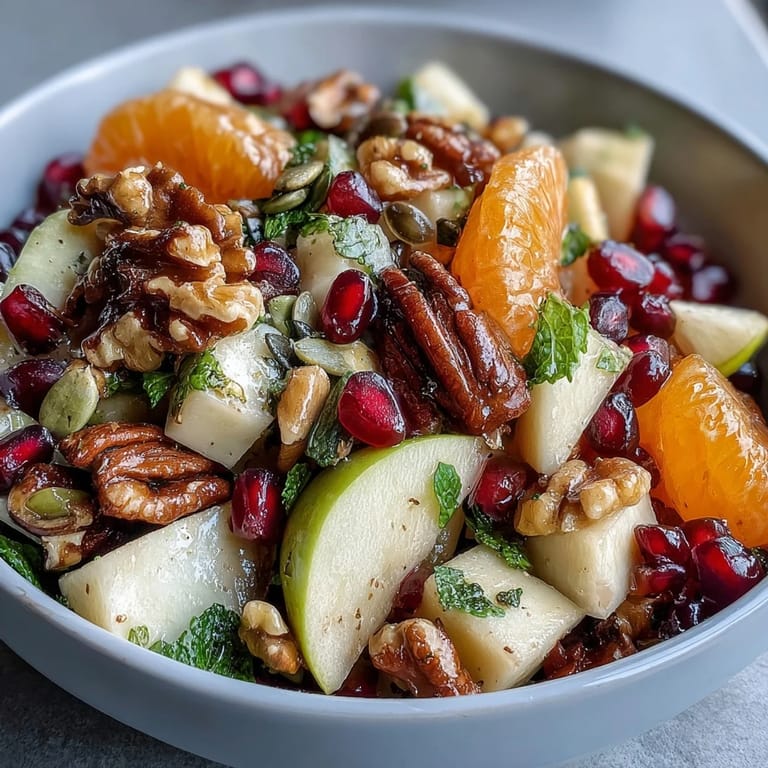
 One November afternoon, I was rummaging through my refrigerator when a pomegranate caught my eye—ruby red and promising. I'd bought it days earlier with vague intentions, and suddenly I understood why: it needed to become this salad. The moment those seeds hit the bowl alongside crisp apple and orange segments, something clicked. This isn't just a dish; it's what happens when you stop overthinking and let the season guide you.
I made this for a potluck where everyone brought the expected casseroles and pasta dishes. When I set down this jewel-toned salad, people actually paused. A friend went back for thirds, and later admitted she'd never realized a salad could feel like dessert. That's when I knew this recipe was onto something real.
Ingredients
- Pomegranate (1 large, seeds only): These little rubies are the soul of the salad—sweet, tart, and packed with antioxidants. The trick is scoring the skin and rolling it under your palm to release the seeds into a bowl of water, where the pith floats away and seeds sink.
- Orange (1 large, peeled and segmented): Fresh citrus brightens everything it touches, and the natural juice mingles with the dressing beautifully as you toss.
- Apple (1 crisp variety, cored and diced): Choose something like Honeycrisp or Granny Smith so it holds its crunch and doesn't turn mealy.
- Pear (1 ripe, cored and diced): A perfectly ripe pear adds subtle sweetness and that creamy texture that balances the crisp elements.
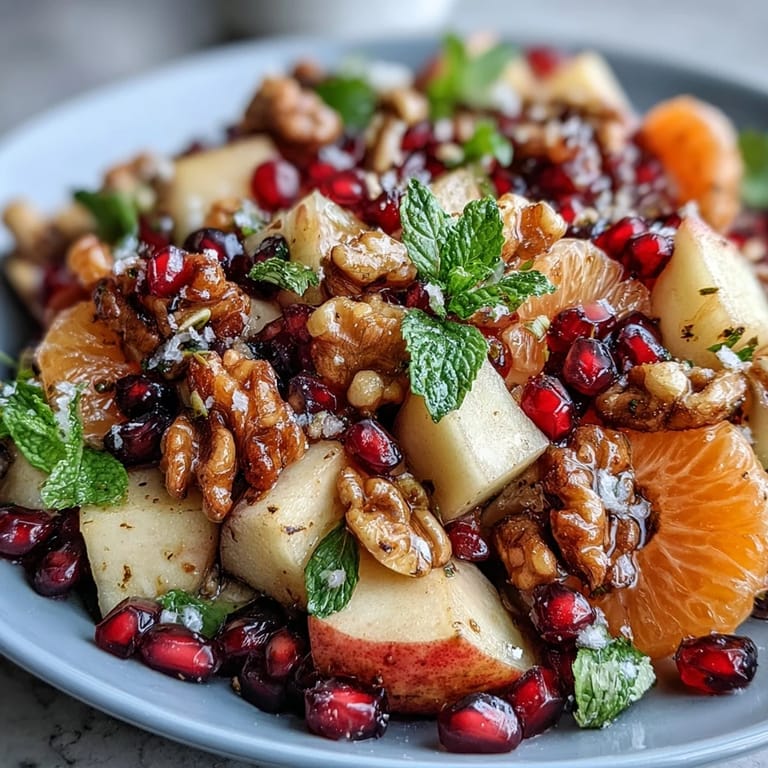
- Walnuts (1/2 cup, roughly chopped): Toasting them first transforms the entire salad—they become deeper, almost buttery, and way more memorable.
- Pumpkin seeds (2 tbsp): These add earthiness and protein; they're the quiet hero of the mix.
- Sunflower seeds (2 tbsp): Light and delicate compared to pumpkin seeds, they contribute a different kind of crunch.
- Extra-virgin olive oil (2 tbsp): Don't skip the quality here—it's tasted directly, so use something you'd actually eat off a spoon.
- Lemon juice (1 tbsp, freshly squeezed): Bottled juice tastes like sadness; fresh lemon makes everything sing.
- Honey or maple syrup (1 tsp): Just enough to round out the sharp edges without making it dessert.
- Ground cinnamon (1/4 tsp): This unexpected spice is what makes people ask what's in it—it's warm without being obvious.
- Sea salt (pinch): A good salt brings all the flavors into focus, so don't underestimate it.
- Fresh mint leaves (2 tbsp, chopped, optional): If you have it, mint transforms this from a salad into an experience.
Tired of Takeout? 🥡
Get 10 meals you can make faster than delivery arrives. Seriously.
One email. No spam. Unsubscribe anytime.
Instructions
- Release the pomegranate seeds:
- Cut the pomegranate in half and hold it over a bowl, tapping the back with a wooden spoon so the seeds fall freely. Any white pith that comes along floats to the surface—just skim it off.
- Prep your fruit:
- Peel and segment the orange, dice the apple and pear, keeping everything in the same large bowl. The juices from the fruit will start mingling, which is exactly what you want.
- Add the crunch:
- Scatter the chopped walnuts and both seeds over the fruit—don't stir yet. Let them nestle in naturally.
- Build the dressing:
- In a separate small bowl, whisk the olive oil, fresh lemon juice, honey, cinnamon, and salt until the honey fully dissolves and everything emulsifies slightly. Taste it straight—the flavor should be balanced, with the sweetness and tartness playing off each other.
- Bring it together gently:
- Pour the dressing over everything and toss with a light hand, using two spoons or salad servers so you don't bruise the fruit. You want coating, not drowning.
- Finish and rest:
- Sprinkle mint over the top if you have it, then let the salad sit for 10 to 20 minutes before serving—this allows the flavors to deepen and the textures to settle into harmony.
 Save to Pinterest
 My daughter, who usually pushes vegetables to the edge of her plate, asked for seconds of this salad unprompted. In that moment, I realized I wasn't just making food—I was accidentally teaching her that healthy eating could be delicious and fun. That small victory reminded me why I keep recipes like this close.
Why the Cinnamon Matters
The first time I made this without cinnamon, I thought something was missing. It tasted fine, but flat—like a beautiful painting without shadow. A tiny pinch of cinnamon doesn't announce itself; instead, it whispers underneath everything else, making the fruit taste fruitier and the whole thing feel intentional. It's the difference between a salad and a moment.
The Case for Toasting
Toasting nuts and seeds feels like an extra step, but it's really just 3 minutes of your time and it's transformative. When I first started skipping it, I noticed people responded differently—they ate it politely, but without enthusiasm. The moment I went back to the toasted version, the salad became something people actually wanted. Raw walnuts taste grassy and slightly flat; toasted ones taste like autumn and have real depth.
Make It Your Own
This salad is forgiving enough to bend to what you have on hand. I've swapped pears for persimmons when pears weren't good, switched in pomegranate molasses when I wanted more tartness, and added a crumble of goat cheese because I had it. The structure stays solid no matter what, so you can trust your instincts here.
- If pomegranates aren't in season, dried cranberries or fresh figs keep the same jewel-toned vibe and sweet-tart balance.
- Toast your nuts and seeds in advance and store them separately if you want to make everything except the fruit the night before.
- A tiny splash of pomegranate molasses in the dressing instead of honey adds authentic depth if you keep it on hand.
 Save to Pinterest
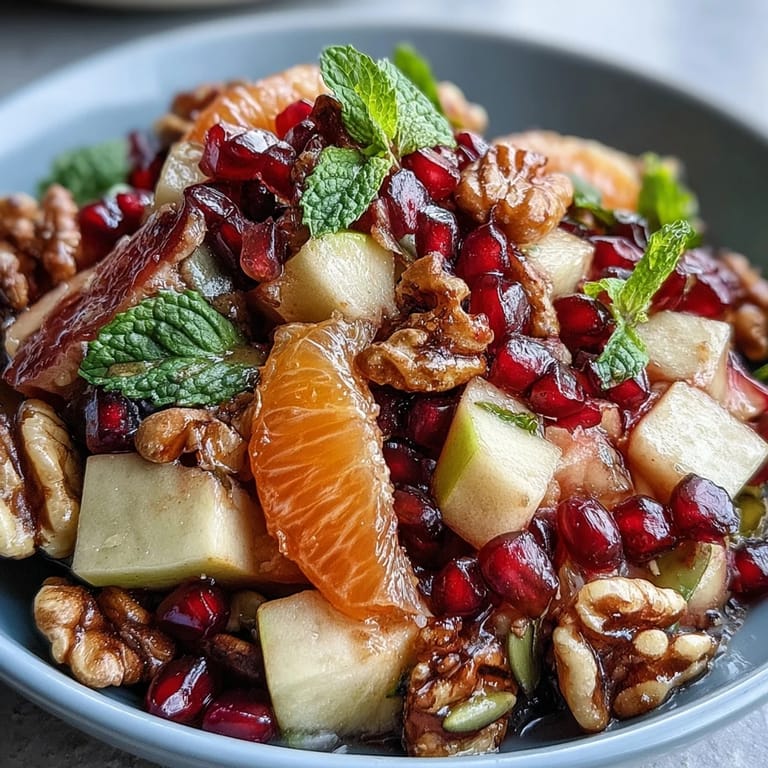
 This salad has become my answer when someone asks what to bring to a gathering where you want to seem effortless but thoughtful. It's simple enough that you're not stressed, and good enough that people actually remember it.
Recipe FAQs
- → How long does pomegranate walnut salad keep?
The salad stays fresh for up to 2 hours refrigerated. After this time, the fruits may release moisture and walnuts can lose their crunch. For best results, dress just before serving.
- → Can I prepare the components ahead?
Absolutely. Seed the pomegranate, chop the fruits, and prepare the dressing up to a day in advance. Store everything separately in airtight containers, then toss together when ready to serve.
- → What other fruits work well in this salad?
Persimmons make an excellent pear substitute, while kiwi can replace apples for added brightness. Grapes, segmented blood oranges, or even figs during autumn create lovely variations on this theme.
- → Should walnuts be toasted first?
Lightly toasting walnuts and seeds enhances their nutty flavor and adds extra crunch. Simply toast in a dry pan over medium heat for 3-4 minutes until fragrant, then cool before adding to the salad.
- → Is this suitable for vegan diets?
Simply swap the honey for maple syrup to make this completely plant-based. The remaining ingredients are naturally vegan-friendly, and the olive oil-based dressing works perfectly without animal products.
- → What dressing alternatives complement the flavors?
A balsamic glaze reduction adds depth, while orange-infused oil brightens the citrus notes. For something creamy, a dollop of Greek yogurt thinned with orange juice creates a lovely contrast.