 Save to Pinterest
 I discovered Buddha bowls on a Tuesday afternoon when I was tired of eating the same things over and over. A friend had posted a photo of hers on her phone — this gorgeous, color-blocked arrangement of grains and vegetables that somehow looked both simple and special. I asked her to describe it, and she just shrugged and said, "I throw together whatever I have, make a tahini sauce, and suddenly it feels fancy." That stuck with me. Now, years later, I make these bowls almost weekly, and they've become my quiet ritual for turning leftovers and random pantry finds into something that feels intentional.
I remember making these for my roommate the first time they admitted they'd never tried tahini before. Watching their face when they tasted the dressing was worth every minute of prep. They came home late from work for the next two weeks asking if I'd made the bowls again. That's when I realized this wasn't just convenient food—it was the kind of thing that makes people feel cared for.
Ingredients
- Quinoa or brown rice (1 cup uncooked): These are your foundation, and they're sturdy enough to hold everything else without getting soggy. Quinoa cooks faster and has a nuttier bite, while brown rice feels more substantial if you're cooking for hungry people.
- Firm tofu or chicken (400 g tofu or 2 breasts): Press your tofu well before cubing—even five minutes with paper towels makes a huge difference in how crispy it gets. For chicken, slice it thin so it cooks through quickly and stays tender.
- Cherry tomatoes (1 cup): The brightness of these matters more than you'd think; they're the pop of acidity the bowl needs.
- Shredded carrots (1 cup): Raw carrots keep their crunch through the whole eating experience, which is essential for texture.
- Baby spinach (1 cup): Layer it in the bottom of the bowl where the warm grains will soften it just slightly without wilting it completely.
- Steamed broccoli florets (1 cup): Steam these ahead of time so they're tender but still bright green; overcooked broccoli makes the whole bowl feel sad.
- Ripe avocado (1): Add this as late as possible—just before eating—to prevent browning, and slice it with a gentle hand rather than chopping.
- Radishes (2): These provide a peppery snap that cuts through the richness of the dressing and keeps things lively.
- Tahini (3 tbsp): This is the soul of the dish; don't skip it or substitute it with something lighter, or you'll miss what makes it all come together.
- Lemon juice (2 tbsp): Fresh lemon is non-negotiable here; bottled just doesn't have the same brightness.
- Olive oil (1 tbsp): A good quality oil makes a real difference in the dressing and on the protein.
- Maple syrup or honey (1 tbsp): This balances the tahini's earthiness with just a whisper of sweetness.
- Garlic (1 small clove, minced): Raw garlic punches through and keeps the dressing from tasting flat.
- Toasted sesame seeds (2 tbsp): Toast them yourself if you can; they taste infinitely better than pre-toasted ones sitting in a jar.
- Fresh coriander or parsley: The herb is your final flourish—it brings freshness and makes the bowl feel complete.
Tired of Takeout? 🥡
Get 10 meals you can make faster than delivery arrives. Seriously.
One email. No spam. Unsubscribe anytime.
Instructions
- Start your grains:
- Rinse your quinoa or rice briefly under cold water, then bring it to a boil with the measured water. Once it's simmering, reduce the heat and let it cook undisturbed—this is a good moment to prep everything else without rushing.
- Cook your protein:
- If using tofu, press it between paper towels for five minutes, cube it generously, then toss with a little olive oil and seasoning before roasting at 200°C until the edges turn golden and crispy. If using chicken, slice it thin and sauté over medium heat in a hot skillet with just a drizzle of oil, watching the color change from opaque to golden—this takes about six to eight minutes, and you'll know it's done when there's no soft center when you cut into the thickest piece.
- Prepare your vegetables:
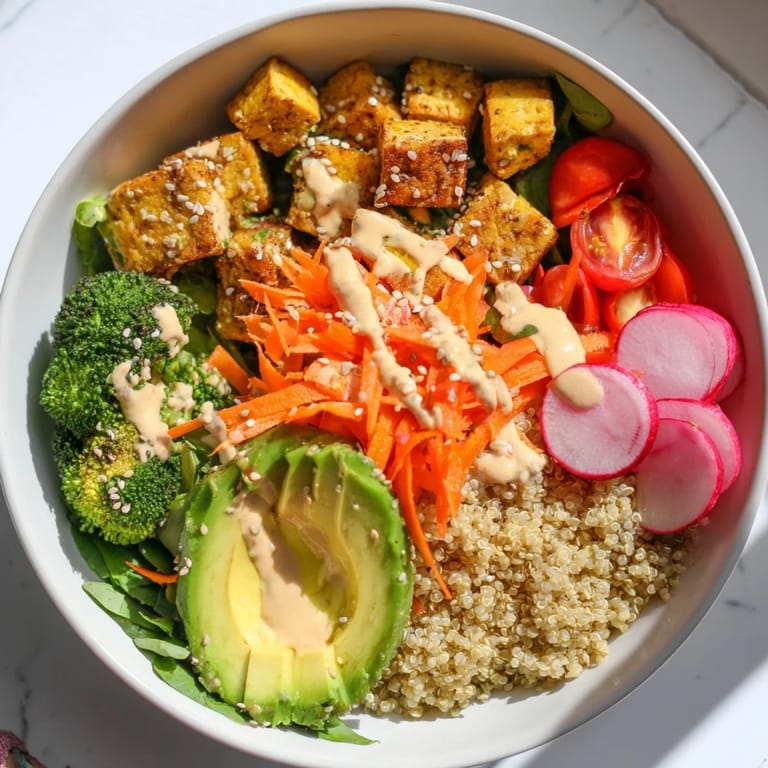
- Work with a sharp knife and a good cutting board for this part; I like to halve the tomatoes, shred the carrots into fine, delicate strands, steam the broccoli until just tender, slice the avocado with gentle pressure, and ribbon the radishes paper-thin. The goal is variety in texture and visual appeal.
- Make the dressing:
- Whisk tahini with lemon juice, olive oil, maple syrup, water, and minced garlic in a bowl until it's pale and smooth—it should pour but not run. Taste as you go and adjust the salt, pepper, and lemon to balance the earthiness of the tahini with brightness.
- Assemble your bowl:
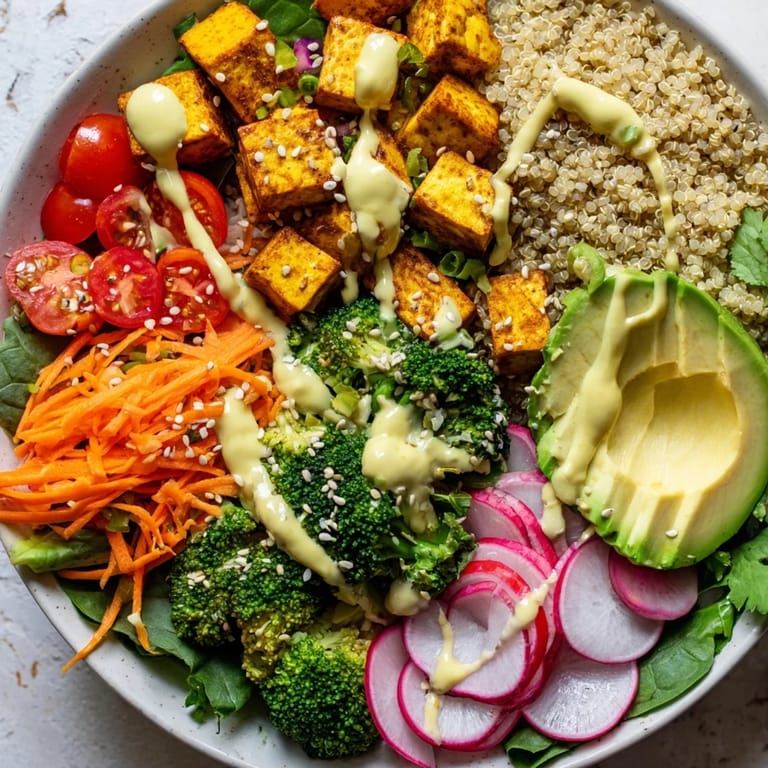
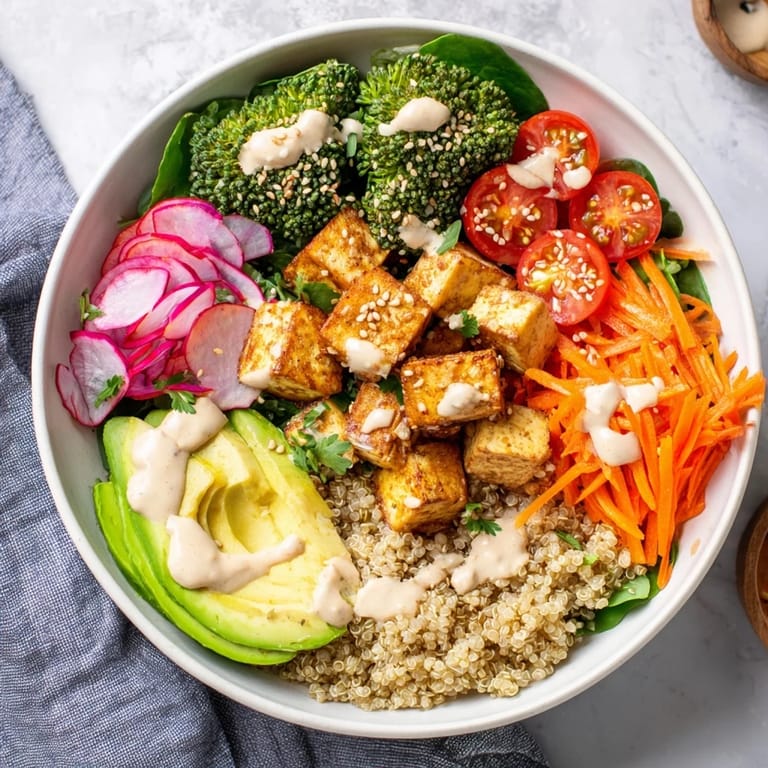
- Start with a base of warm grains, lay the spinach on top of the warm grains so it softens slightly, then arrange your vegetables and protein in sections around the bowl—I like creating distinct areas rather than mixing everything together, so each bite is your choice.
- Finish and serve:
- Drizzle the tahini dressing generously over everything, scatter the toasted sesame seeds and chopped herbs on top, add pickled onions if you like that sharp bite, and serve right away while the grains are still warm and the vegetables are crisp.
 Save to Pinterest
 One evening I made these bowls for my parents, who usually stick to traditional meals. My dad went back for seconds and asked me to write down exactly how I made the dressing. That note is still on his fridge, slightly stained from olive oil.
Why Grain Bowls Feel Like Self-Care
There's something about assembling a bowl like this that makes you feel more intentional about eating. You're not mindlessly grabbing something; you're building a meal with your hands, choosing where each vegetable goes, deciding how much dressing feels right. It takes maybe twenty minutes total, but it feels like you've done something nourishing for yourself in a way that quick-grab meals never do.
How to Make These Ahead
I prep my bowls on Sunday nights for the week ahead, though I keep the avocado and dressing separate and add them just before eating. Everything else—the grains, the protein, the raw vegetables—holds up beautifully in a container for four days if stored properly. The cold grains actually taste better than you'd expect, and there's something nice about having breakfast or lunch ready without thinking.
Ways to Play with This Recipe
The beauty of Buddha bowls is that they're endlessly customizable. I've made them with millet instead of quinoa, added roasted chickpeas or tempeh instead of tofu, and swapped in kale when spinach wasn't around. Some people add nuts for crunch, others layer in cucumber or bell peppers. The tahini dressing works with almost any grain and vegetable combination you dream up, so treat this recipe as a starting point rather than a rigid formula.
- Try substituting farro or millet if you want a different grain texture.
- Use whatever raw or cooked vegetables you have on hand—the colors are what matter most visually.
- Add a fried egg on top if you want richness and extra protein.
 Save to Pinterest
 These bowls have become my go-to for nights when I want something healthy but still feel like I'm treating myself. There's no mystery to them, just thoughtful assembly and a dressing that ties everything together.
Recipe FAQs
- → Can I substitute quinoa with another grain?
Yes, farro or millet are great alternatives that provide a similar nutty flavor and texture.
- → How should I prepare tofu for this bowl?
Press the tofu to remove excess moisture, cube it, toss with olive oil, salt, and pepper, then bake at 200°C (400°F) for 20 minutes until golden.
- → Is it possible to make this bowl vegan?
Absolutely—use tofu as the protein and replace honey with maple syrup in the tahini dressing.
- → What dressing ingredients bring the best balance to this bowl?
The tahini dressing combines lemon juice, olive oil, garlic, maple syrup or honey, and water to create a creamy, tangy, and slightly sweet flavor that ties the bowl together.
- → Can I add extra crunch to this bowl?
Yes, adding nuts or seeds like toasted sesame seeds enhances texture and flavor with a satisfying crunch.